

Modern PC gaming is weird right now. Every second trailer promises “next-gen immersion,” every publisher wants your attention for the next 400 hours, and half the games launching on Steam feel like they were optimized using a microwave and blind optimism. This article will guide you on a journey to find PC Games Actually Worth Playing.
Meanwhile, normal PC gamers are sitting there with older GPUs, budget CPUs, laptops hanging onto life support, or rigs that were “mid-range” sometime during the Jurassic period, just trying to find games that are actually worth the time, money, storage space, and inevitable shader compilation stutter.
That’s where this article comes in.
This is not a list of whatever giant publisher spent the most money on marketing this month. This is not gaming news spam. And this definitely isn’t another generic “Top Games Right Now” article pretending every gamer owns a nuclear-powered RTX machine.
This is BuiltToFrag’s practical gamer guide to PC games that genuinely matter, games that are fun, memorable, replayable, technically playable on normal hardware, and actually worth investing your time into.
Some are new. Some are old. Some are optimized beautifully. Others survive entirely because the gameplay is just that good. Either way, these are the PC games worth caring about.
What Makes a Game Worth Playing?
A good PC game is not just about graphics anymore. Honestly, some of the most technically impressive games released over the last few years have also been the most exhausting to actually play.

Bloated open worlds, live-service checklists, constant monetization, broken launches, endless traversal padding, and hardware requirements that look like they were designed by NASA.
At BuiltToFrag, we judge games slightly differently. A game becomes “worth playing” when it respects the player.
That means:
- Good gameplay loops
- Strong replayability
- Stable performance
- Memorable mechanics
- Reasonable hardware scaling
- Good pacing
- Fair monetization
- Strong atmosphere or personality
- Communities that stay alive
That’s why older games often survive longer than giant modern AAA releases. Great gameplay ages better than graphical flexing.
It’s also why indie games keep embarrassing billion-dollar publishers on a weekly basis. If you want proof of that, check out Why Indie Games Feel Better Than Modern AAA Games.
One recent addition to that conversation is Hollow Knight: Silksong, a surprisingly accessible release that delivers excellent gameplay without demanding cutting-edge hardware.
The Problem With Modern PC Gaming
Modern PC gaming has a serious identity crisis. Games are becoming more expensive to make, more demanding to run, and somehow less respectful of player time at the same time.
Entire launches now revolve around day one patches, shader compilation fixes, DLSS updates, frame generation tricks, and whether the game can survive its first month on Steam reviews. Ironically, some of the most enjoyable gaming experiences still come from older or better-optimised titles, many of which play brilliantly with a controller. If you’re after those kinds of games, take a look at our guide to the best free controller games for PC.
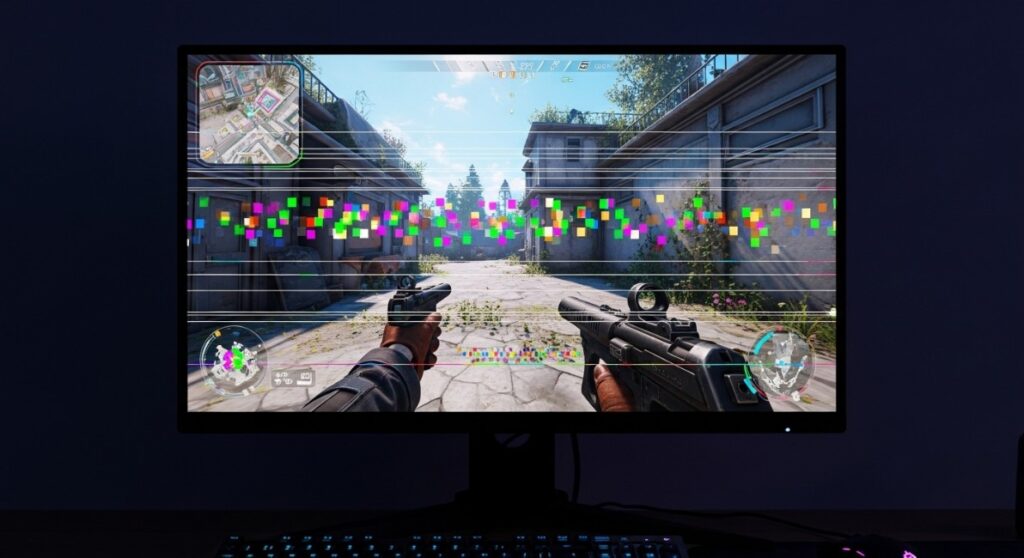
That doesn’t mean modern gaming is dead. Not even close. But it does mean PC gamers need to become far more selective. Some games are genuinely pushing the industry forward. Others are just brute-forcing visuals while the gameplay underneath barely evolved from 2016.
Optimization is also becoming a massive dividing line. Games like Cyberpunk 2077 recovered because the developers kept improving the experience over time. The Riftbreaker followed a similar path, with its 2.0 update transforming the overall experience through meaningful quality-of-life improvements rather than simply adding new content. Others launch broken and stay broken forever.
If you’ve ever wondered why modern games feel inconsistent across different systems, these articles explain the deeper performance reality:
- Why PC Games Run Badly, FPS Drops, Stutter & Bottlenecks Explained
- Why Your PC Stutters Even on Low Settings
- How to Tell If Your CPU or GPU Is the Problem
The reality is simple: PC gamers no longer just buy games. They buy performance risk.
Games That Respect Weak PCs
This is where BuiltToFrag separates itself from generic gaming sites. Most gaming websites assume everyone owns modern hardware. We don’t. That matters because Steam’s own hardware survey still shows a massive spread of real-world PC hardware, not just flagship GPUs and perfect benchmark rigs. You can check Valve’s monthly data through the Steam Hardware & Software Survey.
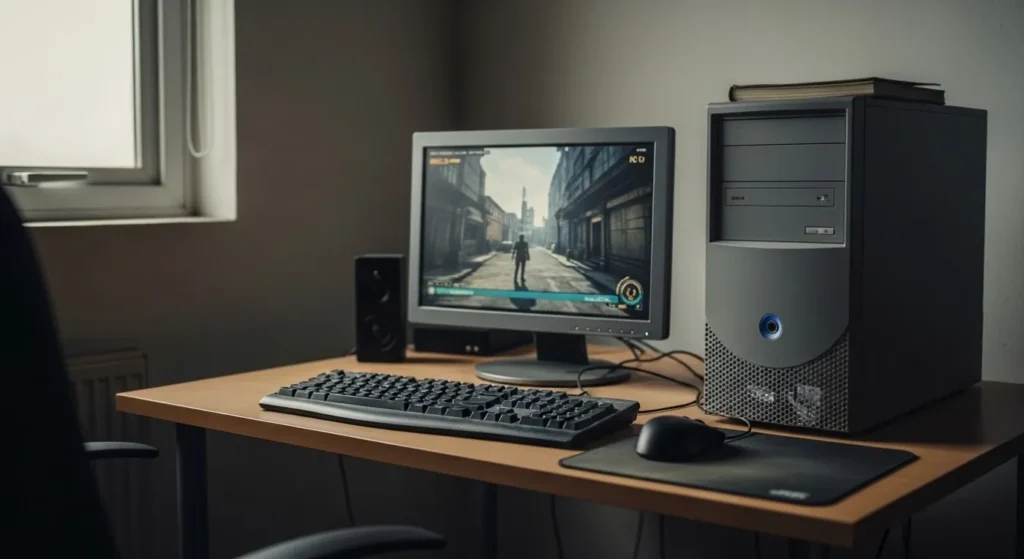
Because millions of PC gamers are still gaming on:
- GTX 1060 systems
- older Ryzen CPUs
- budget laptops
- office PCs with upgrades
- integrated graphics
- 4GB RAM systems
- dual-core survivors somehow still refusing to die
And honestly? Some of those systems are still perfectly capable of running genuinely fantastic games. If your hardware is struggling, these are some of the best discovery hubs on the site:
- Free Games for Garbage PCs
- The Absolute Best Free Games for Low-End PCs
- Offline Games That Actually Run on Weak PCs
- Open World Games That Run on Low-End PCs
- Games That Still Run on Dual-Core CPUs
- FPS Games Without a Graphics Card
- Best PC Games Under 5GB
The funny part? Some of these older or lighter games are honestly more fun than modern AAA releases drowning in battle passes and cinematic walking sections.
The Best PC Game Discoveries
Discovery is one of the best parts of PC gaming. Not giant launch events. Not influencer hype. Actual discovery. Finding a weird strategy game nobody talks about. Discovering a free RPG that somehow consumed your entire weekend.

Reinstalling an older game and realizing it still destroys modern competitors mechanically. That feeling is what keeps PC gaming alive.
Hidden Gems & Indie Discoveries
Indie developers are carrying huge parts of PC gaming right now. Not because indie automatically means “better,” but because smaller teams are often willing to take gameplay risks modern AAA publishers avoid completely.
- Best Indie RPGs You’ve Never Played
- 10 Indie Games Still Worth Playing in 2026
- Master of Command Strategy Preview
Also If you enjoy deep gameplay without demanding hardware requirements, you’ll find even more excellent recommendations in our guide to Games Like Slay the Spire 2.
Free Games That Aren’t Junk
Free-to-play gaming is flooded with garbage, but there are still incredible games hiding underneath the monetization chaos.
- Top Free Shooters That Don’t Fry Your PC
- Best Free RPG Games Right Now
- Free MMORPGs for Low-End PCs
- Online Games for Low-End PCs That Still Have Active Players
Games With Real Replayability
Replayability is becoming one of the most underrated qualities in gaming. A lot of modern releases are gigantic once, then completely forgettable forever. The best PC games survive because players keep returning to them years later.
That usually happens because of:
- modding
- strong mechanics
- community support
- player creativity
- sandbox systems
- competitive depth
- procedural replayability
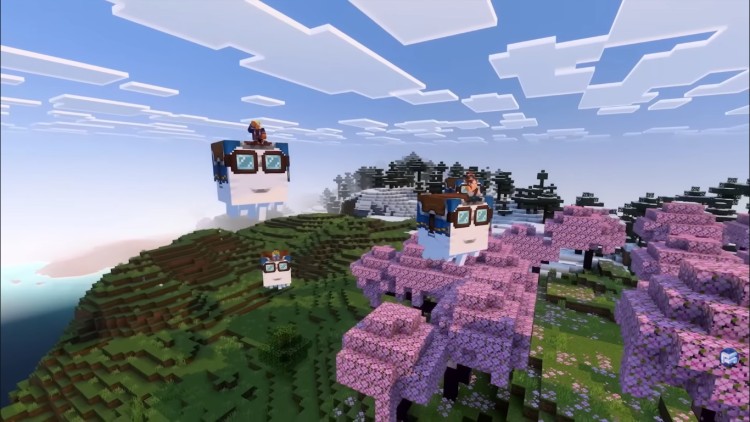
Games like:
- Minecraft
- Skyrim
- Dota 2
- Counter-Strike
- RimWorld
- Terraria
- Project Zomboid
…survive because players build stories inside them. Not because the graphics are expensive. If you enjoy long-term PC gaming experiences,
these are worth exploring:
Performance vs Graphics
One of the biggest lies in modern gaming is that visuals automatically equal quality. They don’t. Some gorgeous games feel terrible to play because of: poor frametimes, stutter, bad traversal performance, memory leaks, unstable frame pacing, or absurd hardware demands.

Meanwhile, games with simpler visuals often feel dramatically smoother and more responsive. That’s especially important for normal PC gamers. Because smooth gameplay usually matters more than ultra ray-traced puddles reflecting your emotional trauma in 8K. Even a demanding game like Red Dead Redemption 2 can be surprisingly playable when you prioritize consistency over max settings, as we found in our guide to running RDR2 on a low-end PC.
When a game launches with weird PC issues, PCGamingWiki is also worth checking because it tracks fixes, workarounds, and common PC-specific problems across thousands of games.
If you care about real-world performance, these guides are essential:
- What Smooth Gameplay Actually Feels Like
- How Much RAM Do Games Actually Need?
- DLSS vs FSR vs XeSS
- Ray Tracing Isn’t Magic
Games Worth Revisiting
One of the best things about PC gaming is that older games rarely disappear completely. Unlike locked console generations, PC gaming has a long memory.

Games from 10 or even 20 years ago can still be: – replayed, – modded, – improved, – and rediscovered. And honestly, some older games still feel better designed than modern releases overloaded with modern gaming baggage.
That’s why revisiting games matters. Not for nostalgia alone, but because genuinely good game design survives trends.
Some modern games worth revisiting or reevaluating:
- Is Cyberpunk 2077 Worth Playing in 2026?
- Is Diablo 4 Actually Worth Playing Again?
- They Actually Fixed Riftbreaker 2.0
- Why Battlefield 2042 Finally Feels Like Battlefield Again
Modern Games Worth the Hardware
Not every demanding modern game is bad. Some genuinely earn their hardware requirements by delivering: – incredible gameplay, – atmosphere, – technical ambition, – or unforgettable worlds.

These are the games where the performance cost actually feels justified.
Where PC Gaming Is Headed
PC gaming is becoming increasingly divided. On one side, the industry keeps pushing ultra-expensive hardware, AI-generated frames, cinematic visuals, and games that somehow need 16GB of VRAM just to stop coughing during cutscenes.
On the other, players are rediscovering something far more important: games that are fun, scalable, replayable, and actually run properly on normal hardware. That split is shaping the future of PC gaming faster than most publishers probably realize.
The Two Directions PC Gaming Is Moving Toward:
On one side: – massive hardware escalation, – AI frame generation, – ultra-expensive GPUs, – bloated engines, – and giant cinematic games.
On the other: – indie innovation, – replayable systems, – low-spec optimization, – modding communities, – and practical gaming experiences.
Honestly, both sides will probably continue existing together. But the future of PC gaming will likely belong to developers who understand one important thing, Players remember good experiences far longer than they remember graphical marketing buzzwords.
That’s why: – optimization matters, – scalability matters, – player freedom matters, – and replayability matters. The best PC games aren’t always the most expensive ones. They’re the ones players genuinely cannot stop thinking about.
Final Thoughts
PC gaming has never had more choice. And honestly? That’s part of the problem.
There are too many games, too many storefronts, too many monetization systems, too many live-service experiments, and too many launches demanding absurd hardware for gameplay that barely survives a weekend.
That’s why filtering matters now. The goal isn’t to play everything. The goal is to find the games actually worth your time. Games with personality.
Games with replayability. Games with strong communities. Games that survive trends. Games that still feel good months or years later. Games that respect players instead of treating them like engagement statistics.
And most importantly: Games that normal PC gamers can actually enjoy without needing a mortgage-sized GPU upgrade every six months.
That’s the kind of PC gaming BuiltToFrag cares about.