

Lists of the best free RPG games often mix genuinely free releases with restricted trials, paid subscriptions and titles that need far more PC power than expected. That makes it difficult to know what you can actually play without spending—or whether your PC can handle it.
For a quick answer, start with Moonring for a completely free offline adventure, Path of Exile for deep online build crafting, or Warframe for fast action and long-term progression. The right choice depends on your hardware, storage and tolerance for online systems or paid convenience.
This PC-only guide separates completely free games, permanent free-to-play games, restricted versions and free trials. We checked PC availability, official requirements and account restrictions in September 2026. BuiltToFrag did not benchmark these games, so the listed specifications are publisher-declared requirements, not guaranteed performance.
Best Free PC RPGs: Quick Picks
Use this table to eliminate games that do not suit your PC or your idea of “free.” A free trial with social restrictions is not equivalent to an offline game you can keep, and a small download is not automatically easier to run.
| Game | Choose it for | Free type | Offline? | Official RAM | Declared graphics | Storage | Main catch |
|---|---|---|---|---|---|---|---|
| Moonring | Compact retro adventure | Completely free | Yes | 4GB | Pixel-shader support | 800MB | Old-school design and vague CPU/GPU guidance |
| The Elder Scrolls II: Daggerfall | Classic open-world freedom | Completely free | Yes | Not meaningfully comparable | Original DOS-era game | Small by modern standards | Dated controls; the optional Unity version requires separate setup |
| Old School RuneScape | Long-term progression | Restricted free version | No | 8GB recommended | Intel UHD 610 among listed options | Check current download size | Much of the wider game requires membership |
| Albion Online | Player-driven sandbox MMO | Permanent free-to-play | No | 4GB minimum | DirectX 10-capable GPU | 2GB | Premium affects progression efficiency |
| Path of Exile | Deep character builds | Permanent free-to-play | No | 8GB minimum | GTX 650 Ti or HD 7850 | 40GB | Complexity and paid stash convenience |
| Warframe | Fast action and collecting | Permanent free-to-play | No | 4GB minimum | DirectX 11-capable GPU | 75GB | Large install and a vague GPU requirement |
| Torchlight: Infinite | Seasonal loot and builds | Permanent free-to-play | No | 8GB minimum | GTX 660 Ti or R9 270 | 10GB | Online-only monetised progression |
| Guild Wars 2 | MMO exploration | Free core game | No | 8GB minimum | GTX 680 or HD 7970 | 80GB | Expansion and free-account restrictions |
| Final Fantasy XIV | Story-heavy MMO trial | Restricted free trial | No | 8GB minimum | GTX 970 4GB or RX 480 | 140GB | Not permanently free-to-play |
Minimum specifications are not standardised across publishers. One game’s 4GB RAM minimum should therefore not be assumed to provide the same performance or experience as another game with the same declared requirement.
Completely Free, Free-to-Play or Free Trial?
“Free” can describe several very different deals. Before choosing a game, decide whether you only care about the initial download or want an experience that remains practical without spending.
| Access model | What it means here | Examples |
|---|---|---|
| Completely free | The recommended playable experience requires no purchase, subscription or paid content unlock. | Moonring, Daggerfall |
| Permanent free-to-play | You can keep playing, but optional purchases may affect cosmetics, convenience, progression or character access. | Warframe, Albion Online, Path of Exile, Torchlight: Infinite |
| Restricted free version | A permanent free account exists, but paid membership or expansions unlock substantial features or content. | Old School RuneScape, Guild Wars 2 |
| Free trial | You can play a defined portion without a time limit, but the complete ongoing game is a paid service. | Final Fantasy XIV |
A game can cost nothing to install while still charging for storage convenience, expansions, Premium benefits, characters or unrestricted social features. That does not automatically make it a bad choice, but it should never be hidden behind the word “free.”
Most substantial modern free RPGs use an online or live-service model. If you specifically want an offline game with no subscription or required content purchase, the realistic shortlist is much smaller.
Best Completely Free RPGs for PC
Moonring: Best Completely Free Offline RPG
Choose Moonring if: you want a compact single-player RPG with no subscription, gacha or live-service dependency.
Moonring is a retro-inspired, open-world, turn-based RPG built around exploration rather than constant directions. You travel, trade, fight, sail and investigate a hand-designed world, while the dungeons beneath it change when you leave or die. Its tile-based combat and hidden systems reward experimentation more than following objective markers.
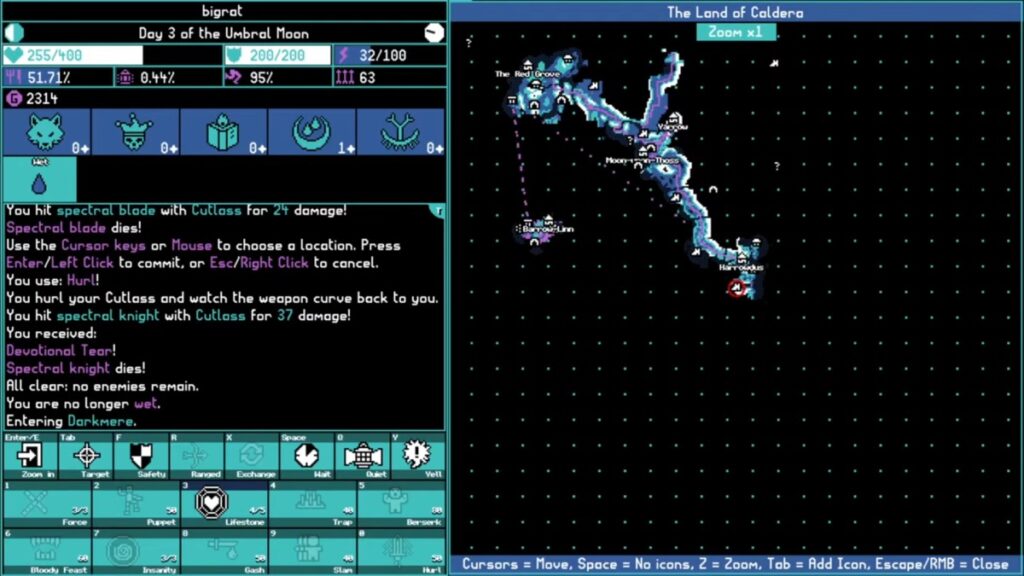
Why it earns this pick: Moonring provides a substantial offline adventure without requiring a purchase, account subscription or permanent internet connection, while its modern conveniences make it more approachable than many genuinely old RPGs. Its official Steam listing asks for 4GB RAM, a graphics card with pixel-shader support and only 800MB of storage—the smallest declared storage requirement among the games evaluated here.
The limitation is not hidden hardware demand but presentation and design. Moonring deliberately borrows from early Ultima-style RPGs, uses simple visuals and expects the player to explore without much handholding. Its store page also provides unusually vague CPU and GPU requirements, so we cannot promise how every old laptop will handle it.
Avoid it if: you need modern cinematics, fully guided quests or fast action. Verify the current requirements and access model on Moonring’s Steam page.
The Elder Scrolls II: Daggerfall: Best Free Classic Open World
Choose Daggerfall if: you want an enormous classic fantasy world and can tolerate a 1990s interface.
Bethesda currently provides the original Daggerfall free for PC. You create a character and decide how to spend your time across towns, factions, quests and enormous dungeons rather than following one tightly controlled route. Its scale and freedom remain the attraction, but combat, navigation and questing feel far less guided than in a modern Elder Scrolls game.

Why it earns this pick: Daggerfall offers a much larger and more open-ended role-playing experience than the other completely free offline recommendation here. It requires no online service or continuing payment model, and its age means its storage demands are negligible compared with current live-service RPGs.
The original Daggerfall is DOS-era software, so it should not be expected to install and behave exactly like a modern Windows game. Bethesda provides the original game files, while Daggerfall Unity is a separate community-made modernisation that uses those files to provide a more convenient modern experience. Unity is optional, but installing it requires additional steps and it should not be confused with Bethesda’s original release.
Avoid it if: you want modern controls, polished onboarding or a game that works exactly like a current Elder Scrolls release. Get the original game and check the current installation guidance through Bethesda’s Daggerfall page.
Best Free-to-Play RPGs for PC
These games can be played without buying the base game, but all require an internet connection and contain paid systems or content. Their advantages and compromises are different enough that there is no honest universal winner. The question is not only whether payment is optional, but whether the unpaid experience remains substantial and practical.
Old School RuneScape: Best for Long-Term Progression
Choose Old School RuneScape if: you enjoy slow progression, many skills and setting your own long-term goals.
Old School RuneScape gives you a large online world where activities such as mining, fishing, crafting, combat and questing improve separate skills over time. There is no single route you must follow: you can pursue quests, earn money, train a profession or work towards equipment and skill targets at your own pace.
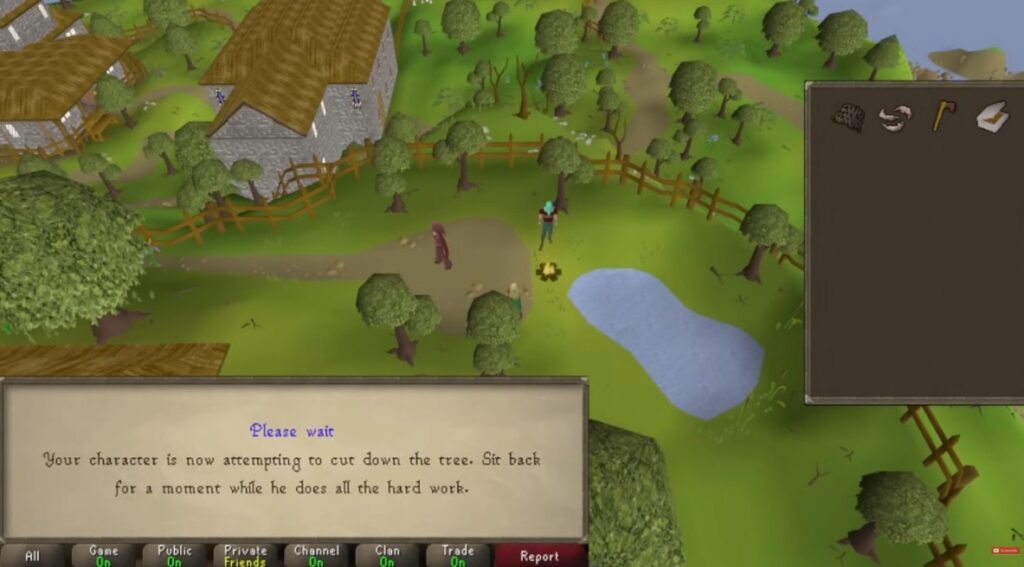
Why it earns this pick: few free RPGs provide the same number of persistent skills and self-directed goals while remaining suitable for comparatively modest graphics hardware. Progress is deliberately slow, but almost every activity contributes towards a longer-term character objective.
Jagex lets new players begin in permanent free worlds, and the free areas contain enough quests, skills and progression to decide whether the game suits you. Membership unlocks nine additional skills, more areas, quests and much of the broader MMORPG experience, so the unpaid version is substantial but not the complete game. Its current PC recommendations list Windows 10 or later, 8GB RAM, an Intel i3-6100-class processor, Intel UHD 610 or listed dedicated-GPU alternatives, and at least 2GB of free storage.
Those declared requirements are lighter than many modern 3D RPGs, but they remain recommendations rather than BuiltToFrag test results. The larger question is whether you enjoy deliberate grinding, click-based interaction and retro presentation.
Avoid it if: you want fast modern combat or access to the entire world without membership. Check Old School RuneScape and the current Jagex specifications.
Albion Online: Best Lightweight Sandbox MMO
Choose Albion Online if: you want a player-driven economy, flexible character roles and meaningful PvP risk.
Albion does not lock you into a permanent character class. Your equipment determines your abilities, allowing you to change roles by changing what you wear. Much of the normal play loop involves gathering resources, crafting, trading, improving equipment and entering increasingly dangerous areas where encounters with other players can put your carried items at risk.
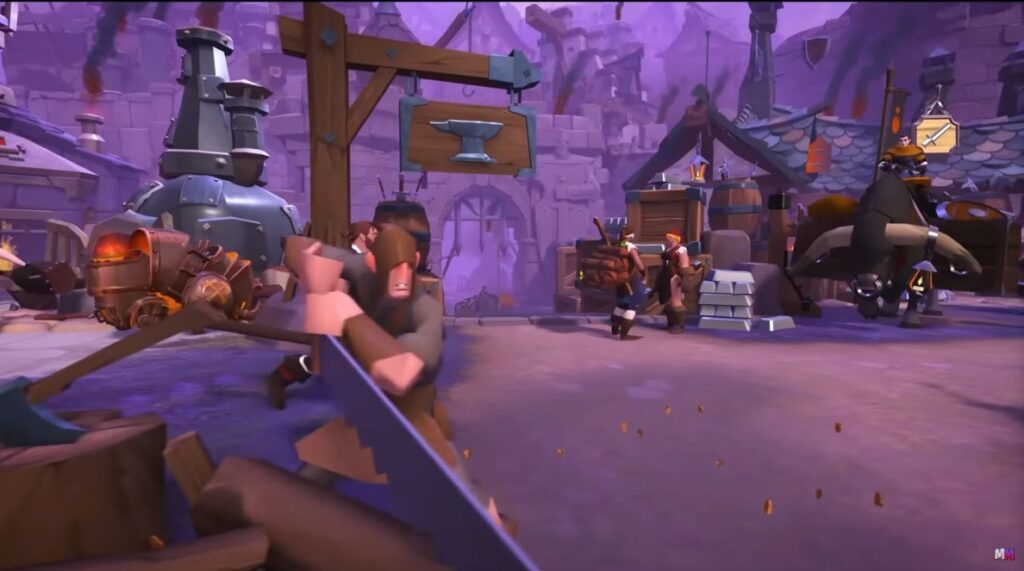
Why it earns this pick: Albion combines unusually light declared PC requirements with a genuinely player-driven economy, classless character progression and cross-platform online play. None of the other lightweight recommendations here places the same emphasis on crafting, trading and high-risk PvP.
Albion has one of the lightest official requirement sets among the online games evaluated here: Windows 10 or 11, 4GB RAM, an SSE2-capable processor and DirectX 10-capable graphics. The developer recommends 8GB RAM and an SSD for a better experience.
Albion Online is permanently free-to-play, and its main gathering, crafting, trading and combat systems remain accessible without Premium. Premium improves progression efficiency and rewards, however, so free players should expect advancement to take longer. Its open economy and PvP focus are strengths for sandbox players and weaknesses for anyone expecting a tightly scripted solo story.
Avoid it if: you dislike PvP pressure, player economies or progression advantages tied to Premium. Verify the current requirements and Premium model on Albion Online’s download page.
Path of Exile: Best for Deep Character Builds
Choose Path of Exile if: you want build experimentation, loot and seasonal action-RPG progression.
Path of Exile uses an isometric view and fast real-time combat as you clear areas, collect equipment and combine skills with support gems that change how they behave. Its enormous passive tree and equipment systems allow extensive build experimentation, but they also make early character decisions more intimidating than in a simpler action RPG.

Why it earns this pick: Path of Exile offers considerably more build depth than the other action-focused games here. The interaction between skill gems, equipment, passive choices and seasonal mechanics gives players room to create highly specialised characters rather than following only a small set of fixed builds.
This recommendation is for the original Path of Exile, not Path of Exile 2. The first game is a free-to-play online action RPG. Its current Steam minimum lists Windows 10, a 2.6GHz quad-core processor, 8GB RAM, a GTX 650 Ti or Radeon HD 7850, DirectX 11 and 40GB of storage.
The campaign, character progression and continuing endgame can be played without buying access. The publisher presents the game as non-pay-to-win, but its store also sells functional stash tabs that become materially more convenient once item storage and trading grow complicated. Payment is not required to experience the game, although a committed long-term player may eventually find the basic storage restrictive.
Avoid it if: you want a gentle learning curve, offline play or simple inventory management. Check the current requirements and access model on the Path of Exile Steam page.
Warframe: Best Action-RPG Hybrid
Choose Warframe if: you want fast third-person combat, collecting and years of online progression.
Warframe sends you through repeatable missions built around shooting, melee combat and highly mobile movement. You collect resources and blueprints to craft new Warframes, weapons and upgrades, then combine modifications to create different builds for harder missions and new areas.
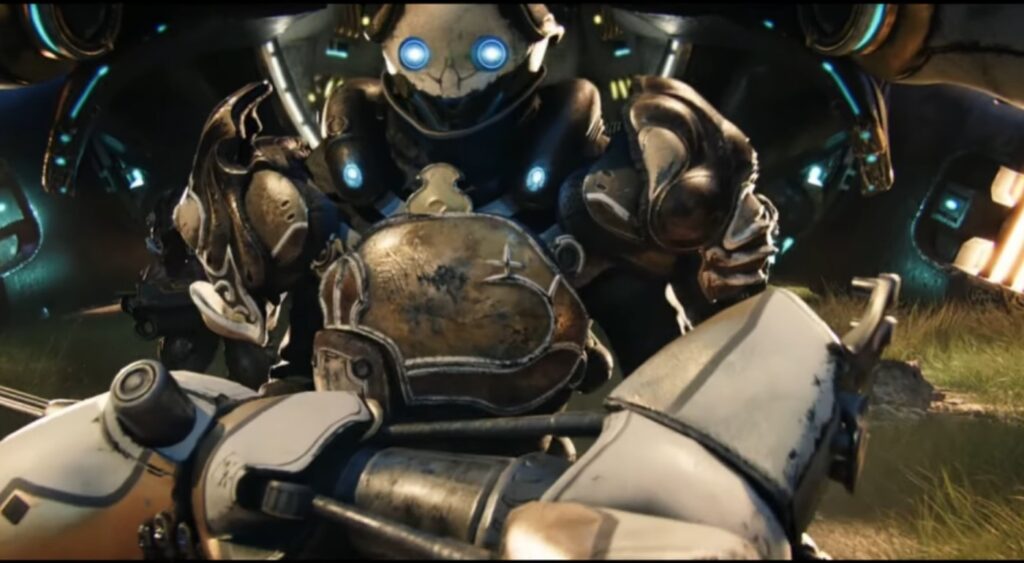
Why it earns this pick: Warframe provides the fastest and most movement-focused combat in this guide while still supporting substantial character, equipment and build progression. It is the strongest match here for someone who wants RPG growth and collecting without slow turn-based or traditional MMO combat.
Warframe sits on the border between action RPG and looter-shooter, but character growth, equipment, builds and resources are central to its long-term loop. Digital Extremes currently lists 4GB RAM, an older Core i5/i7 or AMD FX-4100-class processor and a DirectX 11-capable graphics card as minimum requirements.
Warframe’s missions, quests and equipment progression can be played without buying the base game, but remaining free requires more patience. Crafting timers, resource collection and limited equipment slots can create pressure to spend or trade for premium currency even though payment is not required to continue.
The hardware catch is that “DirectX 11-capable” does not identify a useful minimum performance level. A 4GB RAM figure alone is therefore not enough to recommend Warframe confidently for every low-end PC, especially one using old integrated graphics. It also requires broadband and 75GB of available storage, making drive capacity a bigger barrier than the RAM figure suggests.
Avoid it if: you want offline play, a small installation, a traditional dialogue-heavy RPG or progression without repeated resource gathering. See the official Warframe requirements.
Torchlight: Infinite: Best Compact Seasonal ARPG
Choose Torchlight: Infinite if: you want a modern, loot-focused seasonal ARPG without a huge installation.
Torchlight: Infinite uses fast isometric combat built around clearing groups of enemies, collecting equipment and combining skills, talents and character abilities into specialised builds. Seasonal updates provide new progression goals and reasons to create another character, so it suits players who enjoy repeatedly improving builds rather than completing one offline campaign and leaving.
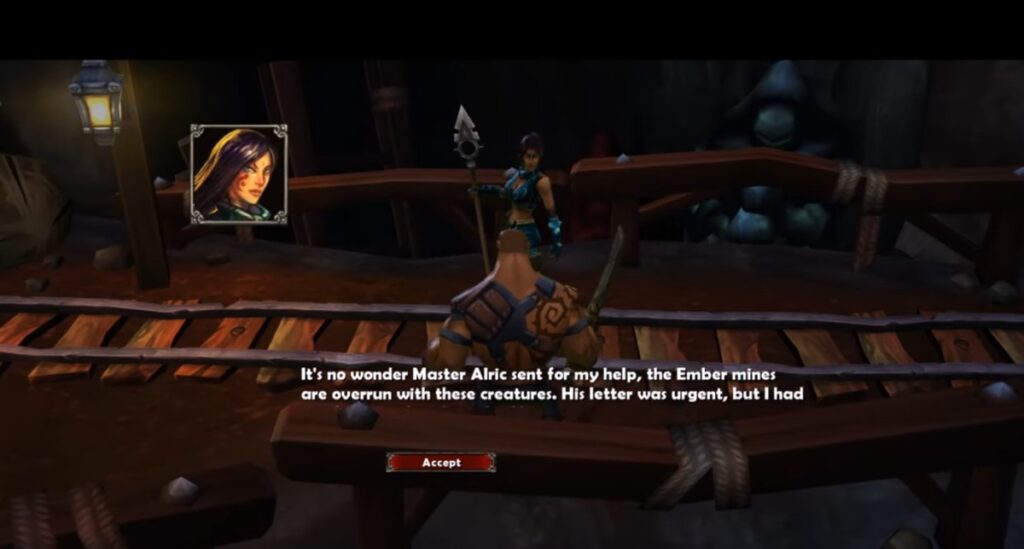
Why it earns this pick: its 10GB declared storage requirement is much smaller than those of Path of Exile, Warframe and Guild Wars 2, while still offering modern seasonal action-RPG combat and substantial build customisation.
Its Steam minimum lists an Intel Core i5-2500 or AMD FX-4350, 8GB RAM, a GTX 660 Ti or Radeon R9 270 with at least 2GB VRAM, DirectX 11 and 10GB of storage. The listing also strongly recommends an SSD.
The core combat and seasonal progression can be played without buying the base game, but Torchlight: Infinite includes paid heroes and other monetised systems. The exact value and pressure of those systems can change between seasons, so players who strongly dislike character access or progression being connected to purchases should examine the current season before committing. Its compact declared storage is attractive, but it does not prove smooth performance on every PC that meets the minimum.
Avoid it if: you want an offline campaign, dislike restarting through seasonal progression or object to live-service monetisation. Verify the current requirements and free model on the Torchlight: Infinite Steam page.
Guild Wars 2: Best Free-Core MMO for Exploration
Choose Guild Wars 2 if: you want world exploration, public events and MMO progression without beginning with a subscription.
Guild Wars 2 encourages you to explore maps, discover locations and join events that begin in the world around you rather than collecting every task from a traditional quest hub. Other players can participate without first forming a permanent group, while your character develops through combat abilities, equipment and specialisations.
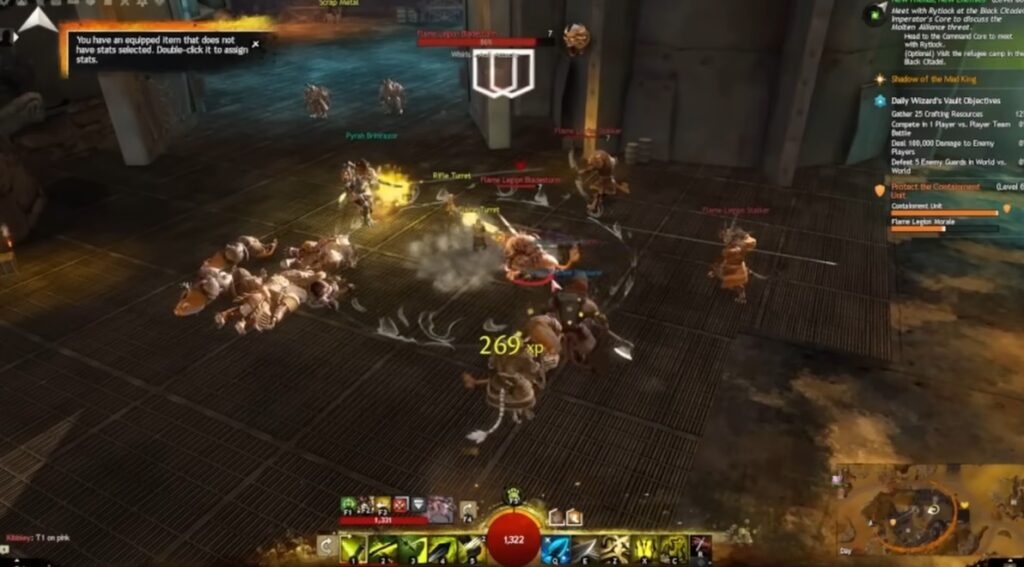
Why it earns this pick: its map completion, public-event structure and cooperative open-world design make exploration a central progression activity rather than scenery between quests. It is the strongest choice here for someone who wants a traditional fantasy MMO world but does not want to begin with a monthly subscription.
ArenaNet allows free accounts to play the entire core version, which is enough to explore the original world, develop characters and decide whether the MMO suits you. Free players receive fewer character and bag slots, limited trading access and restrictions on communication and other systems, while paid expansions contain substantial additional regions, stories and character progression.
Guild Wars 2 should no longer be labelled universally low-end friendly. Its current official minimum lists 8GB RAM, a GTX 680 or Radeon HD 7970, a 3.4GHz Intel i3 or 3.8GHz AMD Athlon X4, DirectX 11 and 80GB of storage.
Avoid it if: your PC falls below those declared requirements or you want the complete current game without buying expansions. Verify the official Guild Wars 2 requirements and free-account restrictions. If an MMO is specifically what you want, compare our free MMORPGs for low-end PCs.
Best RPG Free Trial: Final Fantasy XIV
Choose Final Fantasy XIV’s trial if: you want a story-heavy MMO and accept that the complete ongoing experience is a paid service.
Final Fantasy XIV places a long central story between its dungeons, boss battles and multiplayer duties. One character can learn multiple combat, crafting and gathering jobs, while supported story dungeons can also be completed with computer-controlled allies if you do not want to rely on other players for every stage.

Why it earns this pick: the trial includes four major story releases—A Realm Reborn, Heavensward, Stormblood and Shadowbringers—with no playtime limit and progression through level 80. That gives story-focused players far more structured RPG content than an ordinary limited demo, although it remains a route into a paid ongoing game rather than a permanently free complete service.
Its current Windows minimum calls for Windows 11, an Intel Core i5-8400, 8GB RAM, a GTX 970 4GB or Radeon RX 480, 140GB of available storage and broadband internet. That makes it the most demanding option in this guide for storage and a poor choice for many genuinely low-end PCs.
Trial accounts face a 300,000-gil currency cap and restrictions involving direct chat, the market board, trading, retainers, Free Companies, party recruitment and PvP. You can still use automatic matchmaking and join a party when invited. Once you purchase any version of the game, that account can no longer return to the free trial and the normal purchase and subscription model applies.
Avoid it if: you require unrestricted social and economy features, have limited storage or never want a future subscription decision. Check the official Final Fantasy XIV free-trial rules and current Windows system requirements before installing because both can change.
Which Free RPG Fits Your PC?
Do not judge compatibility from RAM alone. Your processor, graphics hardware, Windows version, free storage and internet connection can each eliminate a game.
| Your constraint | Start with | Why | What to verify |
|---|---|---|---|
| Very little storage | Moonring, Daggerfall or OSRS | They have the smallest clearly declared storage needs in this set | CPU, GPU, Windows and internet requirements |
| Only 4GB RAM | Start with Moonring or Albion Online | Their publishers list 4GB minimums and their other demands are comparatively light | Your CPU, exact GPU and Windows version |
| 4GB RAM and considering Warframe | Proceed only after checking the GPU and storage | Warframe lists 4GB RAM but gives only a vague DirectX 11 graphics requirement | Your exact GPU, broadband connection and 75GB of free storage |
| 8GB RAM and an older dedicated GPU | Compare Path of Exile, Torchlight: Infinite and Guild Wars 2 | All publish specific older dedicated-GPU minimums | Your exact GPU against the named model, plus storage |
| Integrated graphics | Moonring or OSRS first | OSRS names Intel UHD 610; Moonring has very light but vague declared requirements | Your exact integrated GPU rather than DirectX support alone |
| Offline play | Moonring or Daggerfall | The live-service recommendations require internet access | Whether you accept their retro design |
Meeting a publisher’s minimum specification means only that your PC meets the declared entry requirement. It does not guarantee a stable frame rate or a trouble-free experience, and minimum specifications are not measured to one consistent standard across publishers.
If you do not know which graphics hardware your PC uses, open Windows Task Manager, select Performance and then choose GPU. Compare the model shown there with the named graphics requirement rather than relying only on the amount of RAM in your PC.
If your system has less than 8GB RAM, compare these with our broader list of games for 4GB RAM PCs. If a game officially requires more memory than your PC has, use the gaming RAM buying guide to decide whether an upgrade is sensible rather than assuming it is.
If your PC meets the requirements but the game still hitches or pauses, hardware eligibility may not be the real problem. Work through our guide to why PC games stutter despite capable hardware.
Which Free PC RPG Should You Download?
- Completely free, offline and compact: Start with Moonring.
- Classic open-world freedom: Choose The Elder Scrolls II: Daggerfall.
- Slow, long-term skill progression: Try Old School RuneScape’s restricted free worlds.
- Player-driven crafting, trading and PvP: Choose Albion Online.
- Deep action-RPG build crafting: Choose Path of Exile.
- Fast movement, combat and collecting: Choose Warframe if your GPU and storage are suitable.
- Modern seasonal action with a 10GB declared requirement: Consider Torchlight: Infinite.
- Fantasy MMO exploration and public events: Try Guild Wars 2’s restricted core game.
- A long, story-heavy MMO trial: Choose Final Fantasy XIV if your PC and storage can handle it.
If none of those compromises works for you, leave the RPG category rather than forcing a bad match. The Free Games Hub for Low-End PCs covers other genres, while our free Steam games for low-end PCs guide provides more store-specific options.
How We Selected These Games
We compared free PC RPGs by their access restrictions, hardware demands, storage requirements, type of RPG experience and the practical disadvantages of continuing without spending. A game had to be available on PC in September 2026, require no purchase to begin, use RPG progression as a central or substantial system and provide enough reliable information to explain its access model responsibly.

The final list favours games that provide a substantial unpaid experience and gives each recommendation a distinct reason to choose it. Hardware suitability alone was not enough: the game also had to offer a worthwhile role-playing, progression or build-focused experience for the reader it is recommended to.
BuiltToFrag did not benchmark or personally review these games. Official specifications establish what publishers declare, not how smoothly every PC will perform. Official access rules were used where available, while community discussions helped identify practical concerns such as stash convenience and Premium pressure. Individual player reports were not treated as universal performance measurements or proof that every player will experience the same monetisation pressure.
Dauntless was removed because its servers shut down in May 2025. Wuthering Waves was excluded because its current 16GB RAM, GTX 1060/RX 570-class graphics and 150GB storage minimum conflict with this article’s hardware positioning. Paid games and Game Pass titles were removed because requiring a purchase or subscription does not qualify as free access.
Path of Exile 2 was excluded because it still required paid Early Access when this guide was checked in September 2026. Grinding Gear Games has announced that it will become free-to-play at its full launch on 11 December 2026, so it should be reassessed after that release rather than presented here as already free.
Free PC RPG Questions
Are there free offline RPG games for PC?
Yes. Moonring is a completely free, compact single-player RPG, while Bethesda provides the original Elder Scrolls II: Daggerfall free for PC. Most of the other recommendations in this guide are live-service games and require a permanent internet connection.
What is the best free RPG for a low-end PC?
Moonring is the safest starting point here for a low-end PC because it lists 4GB RAM, requires only 800MB of storage and does not depend on an internet connection. Its CPU and GPU guidance is vague, however, so no game can be guaranteed from the term “low-end” alone. Albion Online is another possibility for a 4GB system, while OSRS specifically names Intel UHD 610 among its recommended graphics options.
What is the best free-to-play RPG for PC?
Choose Path of Exile for complex builds, Warframe for fast action, Guild Wars 2 for exploration, Albion Online for a player-driven sandbox or Old School RuneScape for slow long-term progression. The best choice depends more on the experience, hardware requirements and free-account restrictions you accept than on a single overall score.
Can I play a free PC RPG with 4GB RAM?
Moonring and Albion Online list 4GB minimums and are the first options to investigate. Warframe also lists 4GB, but its vague DirectX 11 graphics requirement and 75GB storage demand make it unsafe to recommend from RAM alone. Check the processor, exact GPU, Windows version, storage and internet requirements before downloading any of them.