

Updated 01/09/2026: This review now reflects Atomic Heart’s completed four-DLC expansion cycle, its current player reception and the announcement of Atomic Heart 2.
Atomic Heart is the kind of game that looks like a masterpiece in screenshots, then opens its mouth and immediately starts a fight. It’s stunning, punchy, weird and sometimes genuinely brilliant, but it still struggles to decide what tone it wants, what story it’s telling, or whether it’s a horror shooter or a comedy routine delivered by a sarcastic glove.
If you’re asking, “Is Atomic Heart worth playing on PC in 2026?”, the honest answer is yes, if its strengths matter more to you than its flaws. The combat, art direction and bizarre alternate-history world remain its strongest reasons to play. The uneven pacing, awkward dialogue and tonal whiplash remain the reasons some players bounce off it.
The difference in 2026 is that you are no longer judging only the troubled launch version. Atomic Heart has received years of patches, all four planned story DLCs have been released, and the first game’s expanded storyline is now complete. That makes it a more substantial and easier recommendation than it was in 2023, especially when discounted, but it does not magically repair the base game’s divisive writing.
How This Review Was Put Together
This is not presented as a first-hand PC benchmark or laboratory-style performance test. I originally wrote this article for my son, who absolutely loves Atomic Heart and has returned to it roughly five times. I have watched him play it on many occasions, so I’m familiar with the game, its combat and the reasons it keeps pulling him back. For this 2026 update, that perspective has been combined with current official game information, patch and DLC details, store information and recent player feedback.
Quick Verdict: Is Atomic Heart Worth Playing in 2026?
Yes, for the right player. Atomic Heart is worth playing if you want an imaginative single-player FPS built around satisfying combat, strange powers and one of the most distinctive science-fiction worlds in modern gaming. It is an even easier recommendation during a good sale.
Best for: Players who enjoy stylish single-player shooters, unusual worlds, upgrade-heavy combat and games willing to take big creative risks.
Not for: Players who need a tightly written story, consistent pacing, restrained dialogue or a serious atmosphere that is never interrupted by jokes.
If you like: BioShock-style worldbuilding, strange science fiction, alternate history and combat that combines guns, melee weapons and special abilities.
Base game or complete package? If you are unsure whether Atomic Heart’s personality will work for you, start with the base game when it is discounted. If you already know that you enjoy the game and want its expanded story, look for an edition or bundle containing the Atomic Pass and all four story DLCs.
For older or budget PCs: Do not buy it based only on the minimum system requirements. Atomic Heart can scale down, but your GPU, available VRAM, storage and target frame rate will determine whether the compromises are sensible. We cover that properly in the PC-performance section.
Bottom line: Atomic Heart is a 9/10 world wrapped around a much less consistent story. In 2026, its larger amount of content and years of post-launch support make it easier to recommend, but you still need to tolerate the game’s dialogue and tonal whiplash.
What Has Changed Since Atomic Heart Launched?
Atomic Heart launched in February 2023 with an unforgettable visual identity, mixed critical reception and a long list of arguments surrounding its writing, performance and design choices. The important question for a new player is whether the version available in 2026 is meaningfully different.
The short answer is yes, although the game’s underlying personality has not changed.
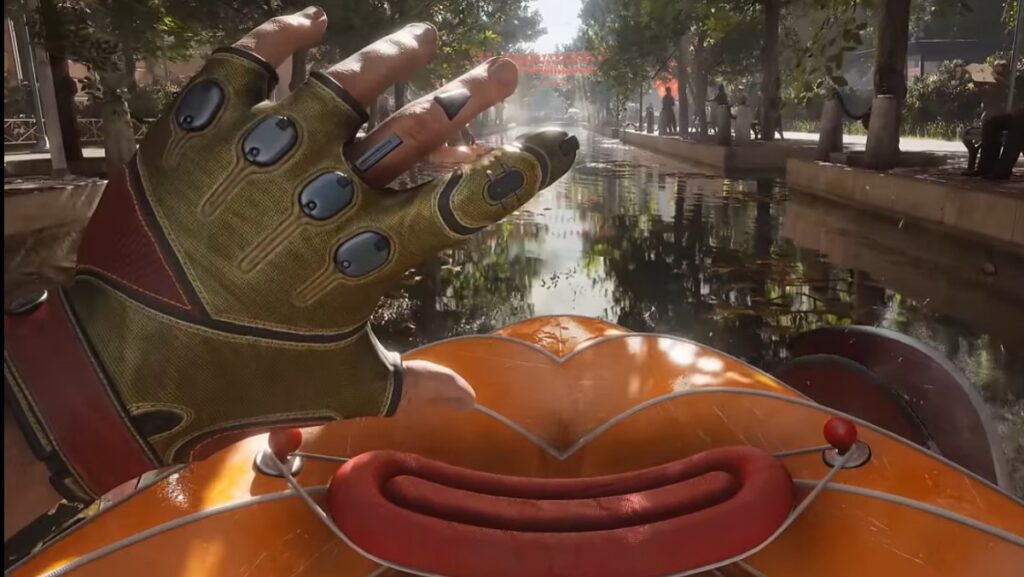
- The game has received years of updates: Post-launch updates have addressed crashes, bugs, missing features and other technical problems.. That does not guarantee flawless performance on every PC, but the current version is more mature than the launch build.
- All four planned story DLCs are available: Annihilation Instinct, Trapped in Limbo, Enchantment Under the Sea and Blood on Crystal expand the world beyond the original campaign.
- The post-launch story now has a conclusion: Blood on Crystal, released on 16 April 2026, is the fourth and final DLC and concludes the first part of Atomic Heart’s wider story.
- Atomic Heart 2 has been announced: The sequel will continue the universe on a larger scale, so the original game is now the beginning of an ongoing series rather than an isolated experiment.
- The divisive parts are still divisive: Updates and DLC can add content and repair technical problems, but they cannot completely change the protagonist, dialogue, pacing or constant tonal shifts of the original campaign.
This is why Atomic Heart is easier to recommend in 2026 without pretending that every launch criticism has disappeared. You are getting a more mature, substantially expanded game, but it remains the same strange and argumentative experience at heart. Mundfish’s official Atomic Heart page confirms the completed DLC lineup, while the studio has also published initial details about Atomic Heart 2.
What Even Is Atomic Heart, and Why Is Everyone Yelling?
Atomic Heart is an alternate-history science-fiction FPS set in a version of the Soviet Union that accelerated robotics and artificial intelligence decades ahead of schedule. It opens with a polished utopian showcase filled with advanced technology, smiling propaganda and impossible architecture. Then that supposed paradise collapses into a nightmare.
You play as Major Sergey Nechaev, better known as P-3, a government agent with serious gaps in his memory and an experimental talking glove attached to his hand. What begins as a mission to contain a technological disaster gradually expands into a much stranger conflict involving artificial intelligence, political control, personal manipulation and machines that have stopped obeying their creators.
The setting is the main reason people continue talking about the game. It is bold, visually dense and packed with images that are difficult to confuse with any other shooter: robotic ballerinas, sentient polymer, living factories, immaculate laboratories collapsing into body horror and cheerful retrofuturism hiding something deeply unpleasant.
If you enjoy PC shooters with a strong visual identity, Atomic Heart belongs in the same conversation as several of the genre standouts covered in our best FPS games for PC guide. However, its distinctive world comes with an equally distinctive personality, and that personality will determine whether you become fascinated or irritated.
The simplest description is still the most accurate: Atomic Heart is confidently designed and inconsistently written. Its world makes a powerful first impression. Its combat gives you reasons to keep playing. Its dialogue regularly threatens to undo both.
Combat Feels Great, Until the Pacing Gets in Its Way
When Atomic Heart gives you room to combine its weapons and abilities, the combat is one of its best reasons to play. Guns feel forceful, melee attacks have convincing impact, and P-3’s experimental glove gives you powers that can shock, freeze, lift or otherwise disrupt enemies.
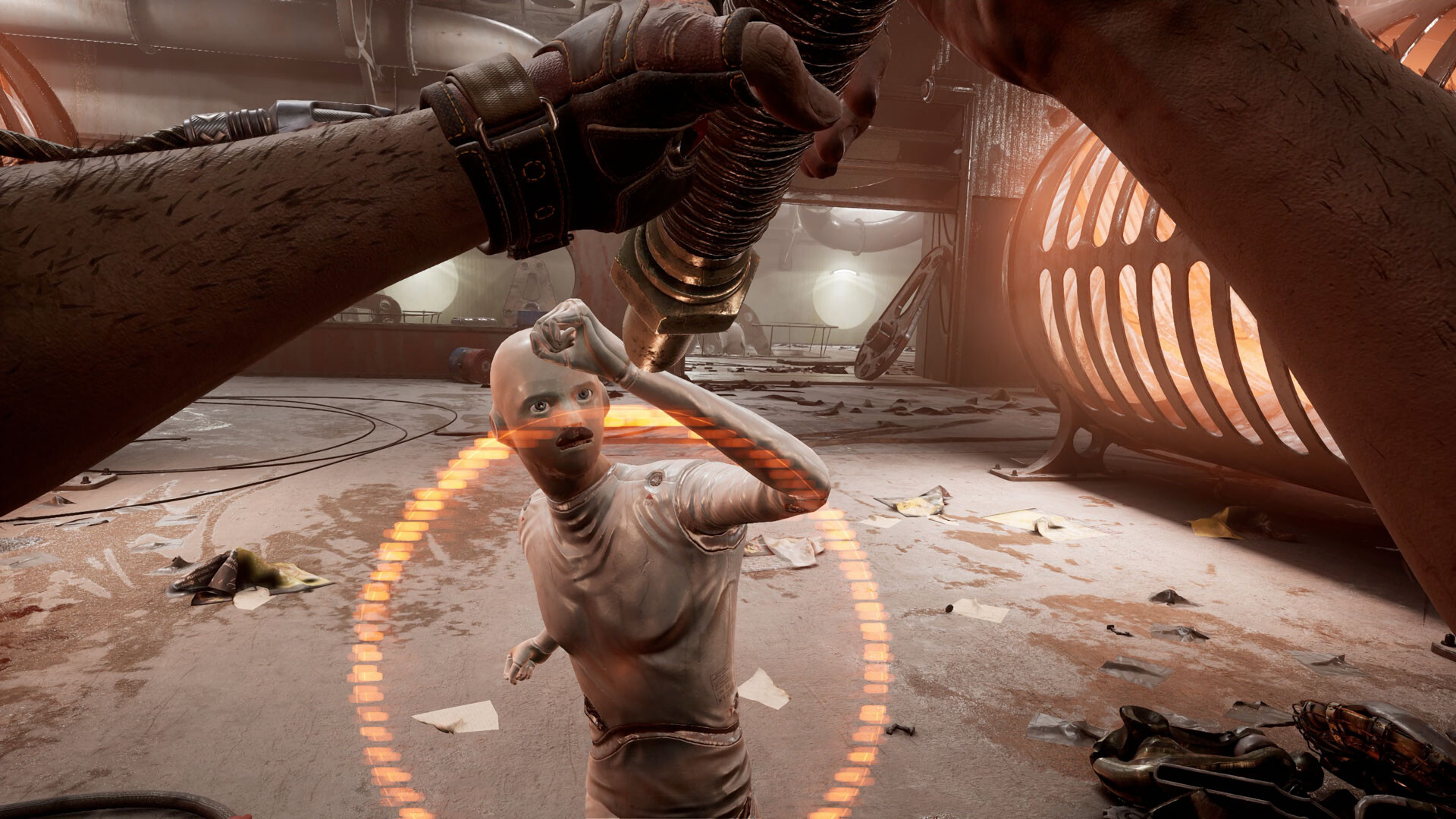
The real enjoyment comes from combining those systems rather than treating Atomic Heart as a conventional run-and-gun shooter. You can disable a rushing robot with an ability, follow with a heavy melee attack, switch to a shotgun when another enemy closes in and use the environment to keep the fight under control.
Weapons and abilities can also be upgraded, which gives exploration a practical purpose. Searching side areas and testing different combinations can produce noticeably different approaches to combat. That flexibility is one reason my son has returned to Atomic Heart roughly five times: once the systems click, there is room to experiment instead of repeating every encounter in exactly the same way.
Enemy design helps. Atomic Heart throws recognisable humanoid robots, organic mutants and much stranger biomechanical creatures at you. Even when an encounter becomes frustrating, the enemies rarely look as though they were borrowed from another shooter.
Boss battles deliver some of the game’s biggest visual spectacles, although the mechanical quality is less consistent. Some fights make excellent use of movement, abilities and weapon switching. Others are more memorable for how they look than for how satisfying they are to complete. The robotic Twins capture Atomic Heart’s appeal perfectly: visually unforgettable, mechanically divisive and instantly recognisable.
Where the Combat Loses Momentum
The problem is not a lack of combat options. It is how often the game interrupts their momentum. Atomic Heart can move from a frantic robot fight into a puzzle, a fetch objective or a confusing interior that sends you back through rooms you thought you had finished.
The open-world sections can also become irritating. Security cameras, repair drones and repeatedly restored enemies create pressure, but they can make exploration feel like work when you only want to reach the next objective. Players expecting the controlled progression of a tightly paced corridor shooter may find these sections more frustrating than liberating.
Enemy behaviour is inconsistent as well. Robots can be aggressive and dangerous when several attack together, but pathfinding and environmental obstacles occasionally make them look much less intelligent than the story claims they are. Checkpoint spacing can add to the frustration when a failed encounter forces you to repeat slow traversal or looting.
What this means for you: Play Atomic Heart if experimenting with weapons, powers and upgrades matters more to you than uninterrupted pacing. If you want a shooter that moves cleanly from one carefully designed firefight to the next, its puzzles, open areas and backtracking may test your patience.
The Talking Glove May Decide Whether You Keep Playing
CHAR-les, the artificial intelligence inside P-3’s glove, is central to both the gameplay and the story. The glove gives P-3 his polymer abilities, scans the environment and supplies explanations and background information. Weapon and ability upgrades are handled through NORA machines rather than by CHAR-les himself.
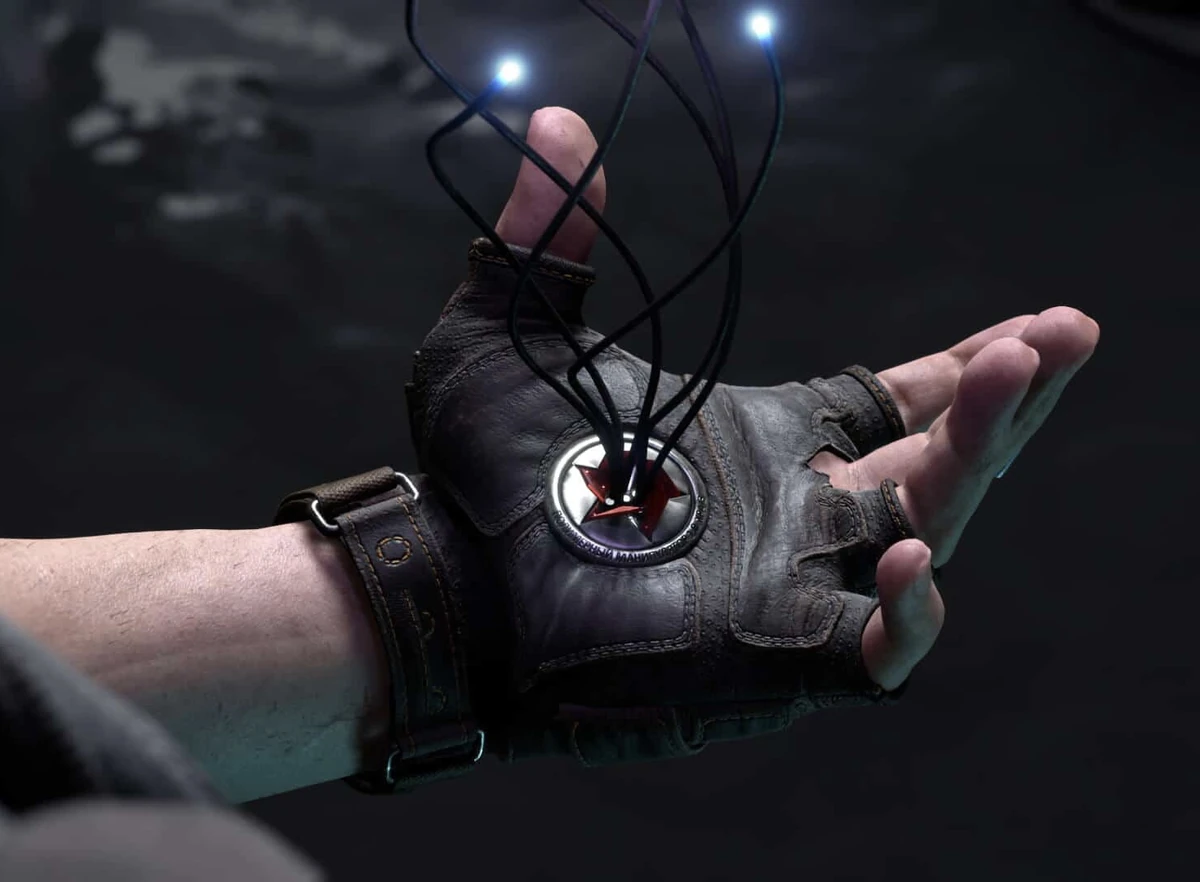
CHAR-les is also one half of an almost continuous conversation. P-3 is already an impatient and argumentative protagonist, while CHAR-les responds with explanations, sarcasm and commentary. Some players enjoy that relationship and find it part of the game’s personality. Others feel that the constant exchanges prevent the world from creating the tension its environments deserve.
That clash is most noticeable inside laboratories and underground facilities. The location may be trying to create unsettling science-fiction horror, only for the conversation to swing into an insult, joke or exaggerated argument. A few minutes later, the game may expect you to take a philosophical monologue or serious revelation completely at face value.
This is more than a small issue with one side character. The conversation between P-3 and CHAR-les carries a substantial amount of the game’s explanation, character development and plot. You cannot simply ignore it without also losing information the story expects you to understand.
What this means for you: If frequent companion dialogue has never bothered you, CHAR-les may become part of Atomic Heart’s charm. If you prefer quiet exploration and environmental storytelling, the amount and tone of the dialogue could become one of your main reasons to stop playing.
A Remarkable World Carrying an Uneven Story
Atomic Heart still looks exceptional in 2026. Its lighting, architecture, machinery, character design and environmental detail create the feeling of walking through an enormous science-fiction exhibition shortly after everything inside it went wrong.

More importantly, the art direction is distinctive rather than merely expensive. Facility 3826 mixes polished utopian propaganda with industrial machinery, decaying laboratories, robotic performers and biological experiments. Even players who dislike the story are likely to remember the world.
The writing does not consistently match that production quality. The story begins with strong ingredients: missing memories, uncontrolled technology, scientific ambition, political power and uncertainty about whom P-3 should trust. The underlying ideas are interesting, but the delivery is often untidy.
Important information can arrive through long bursts of exposition. Some characters appear, deliver cryptic warnings and disappear before the player has enough context to understand their importance. P-3 spends much of the early game angry, confused or demanding answers, which may be understandable within the plot but does not always make him enjoyable company.
The game’s lore is not shallow. Documents, recordings, environments and later revelations show that considerable thought went into the wider universe. The difficulty is separating that interesting worldbuilding from the noisy way the main story communicates it.
The four DLCs expand the setting and continue different threads from the base game, but they do not retroactively turn the original campaign into a clean, tightly paced narrative. Players who become invested in the universe now have more story to explore; players who dislike the base game’s storytelling style should not assume that buying additional content will automatically change their minds.
What this means for you: Atomic Heart works best when you allow the world, combat and visual imagination to carry the experience. If story clarity and believable dialogue are your main reasons for playing a single-player game, its impressive production values may not be enough.
Atomic Heart Strengths Versus Weaknesses
| Category | What Works | What May Put You Off |
|---|---|---|
| Visual design | Distinctive art direction, detailed environments and memorable enemy designs | Visually busy scenes can occasionally make threats difficult to read |
| Combat | Forceful weapons, useful glove abilities and flexible upgrades | Puzzles, open-world interruptions and backtracking disrupt the momentum |
| Story | Interesting ideas, substantial lore and an unusual alternate-history setting | Uneven delivery, clumsy dialogue and deliberately confusing revelations |
| Atmosphere | A memorable mixture of retrofuturism, science fiction and body horror | Frequent banter can undermine tension and quieter exploration |
| 2026 value | Years of updates and four completed story DLCs offer substantially more content | The complete package can be expensive outside a sale |
Can Atomic Heart Run on an Older or Budget PC?
Atomic Heart is more accommodating than its visuals suggest, but the official minimum requirements describe a compromise, not an ideal experience. BuiltToFrag has not conducted an independent hardware benchmark for this review, so the guidance below is based on the official PC requirements and the performance targets attached to them.
| Component | Official Minimum | Official Recommended |
|---|---|---|
| CPU | Ryzen 3 1200 or Core i5-2500 | Ryzen 5 2600X or Core i7-7700K |
| Memory | 8GB RAM | 16GB RAM |
| Graphics | Radeon R9 380 or GeForce GTX 960 with 4GB VRAM | Radeon RX 6700 XT or GeForce RTX 2070 with 8GB VRAM |
| Storage | 90GB available space | 90GB available space; SSD recommended |
| Official Target | 1080p, Low settings, 30 FPS | 1080p, Ultra settings, 60 FPS |
The most important detail is the performance target. A GTX 960 or R9 380 may technically meet the minimum requirement, but the official expectation is only 30 FPS at 1080p using Low settings. That is a playable baseline for someone willing to accept visible compromises, not evidence that an old graphics card will provide a smooth high-quality experience.
What Those Requirements Mean in Practice
- 8GB RAM is the floor: It meets the official minimum, but 16GB gives the game and Windows more breathing room and is the safer target for consistent play.
- Four gigabytes of VRAM requires realistic settings: Begin with the Low preset and avoid assuming that high-quality textures will fit comfortably simply because the game launches.
- An SSD is strongly preferable: The official recommended specification calls for one, and it is the sensible choice for a game requiring roughly 90GB of storage.
- Older processors may still be usable: The minimum CPU requirement reaches back to hardware such as the Core i5-2500, but pairing an old CPU with the minimum amount of RAM and a borderline GPU leaves very little performance headroom.
- Thirty frames per second is not the same as a locked 60: If you are sensitive to inconsistent frame delivery or want responsive mouse aiming, aim above the minimum specification.
BuiltToFrag’s Budget-PC Verdict
If your PC only just matches the minimum specification, Atomic Heart is a cautious buy rather than an automatic recommendation. Use the available demo on Steam if it remains accessible in your region, or buy through a store with a clear refund policy. Test the opening areas at 1080p Low and monitor both frame rate and frame consistency before committing beyond the refund window.
If you have 16GB RAM, an SSD and a graphics card comfortably ahead of the GTX 960 or R9 380, the decision becomes much easier. You may still need to adjust demanding settings, but you are no longer building the entire experience around the official 30 FPS minimum.
If performance feels inconsistent, do not judge the game by average FPS alone. Sudden frame-time spikes can make a reported average look acceptable while combat still feels uneven. Our guide explains how to test gaming PC performance, while our game-stutter troubleshooting guide can help if capable hardware is not producing a smooth result.
You can verify the current requirements on the Atomic Heart Steam page or through the Focus Entertainment PC support page.
What Do Players Think of Atomic Heart in 2026?
Atomic Heart remains divisive, but calling it broadly disliked would be inaccurate. When this article was updated on 1 September 2026, Steam showed 82% positive feedback across 1,328 recent English-language reviews. Its longer-term English-language score was 77% positive across 13,708 reviews.

Those figures matter because they provide a more current picture than the arguments surrounding the 2023 launch. They suggest that the present version is being received somewhat more positively than its long-term average, although Steam percentages can change as new reviews are added.
The game’s broad pattern of praise and criticism remains recognisable:
- Visual design attracts the least disagreement: Even critical players regularly recognise the strength and originality of Facility 3826.
- Combat becomes a major strength once its systems click: Weapons, glove abilities and upgrades give returning players room to experiment.
- Dialogue, pacing and story delivery remain the dividing line: The same personality that makes Atomic Heart memorable can make it exhausting for the wrong player.
- The additional content improves value more than it changes the base game: Four DLCs provide more Atomic Heart, but they do not erase the qualities that made the original campaign divisive.
The original Atomic Heart review thread on Reddit remains useful as a snapshot of launch-era reaction. It should not, however, be mistaken for the current community verdict. For that, recent store reviews are the more relevant evidence.
Which Atomic Heart Edition Should You Buy?
The right edition depends on whether you are still testing your tolerance for Atomic Heart or already know that you want the complete experience. Store names and bundle prices can vary, so check the included items rather than relying only on the edition label.
| Option | What It Includes | Who Should Buy It? |
|---|---|---|
| Standard Edition | The original Atomic Heart base game | New players who want the lowest-cost way to discover whether the combat, dialogue and world work for them |
| Atomic Pass | All four story DLCs for players who already own the base game | Existing owners who enjoyed Atomic Heart and want the complete post-launch story |
| Gold Edition | The base game and Atomic Pass | New players who want the base game plus all four story expansions without paying for extra digital bonuses |
| Ultimate Edition | The base game, all four story DLCs, weapon and glove skins, and a digital artbook | Committed fans or buyers who find it close in price to the Gold Edition during a sale |
BuiltToFrag’s practical recommendation: If Atomic Heart is new to you, buy the Standard Edition during a good sale or try the demo first. The dialogue and pacing are too divisive to assume that every BioShock fan will automatically enjoy it.
If you finish the base campaign and want more, the Atomic Pass provides the four story expansions: Annihilation Instinct, Trapped in Limbo, Enchantment Under the Sea and Blood on Crystal. If you already know you want all of that content, compare the Gold and Ultimate Edition prices. The Ultimate Edition only becomes the better-value choice when the extra cosmetics and artbook matter to you or when a discount brings it close to the Gold Edition.
Do not buy four DLCs solely because Atomic Heart 2 has been announced. The expansions continue and conclude threads from the first game, but the base campaign remains the correct place to decide whether you care enough about the universe to continue.
You can compare the current base-game, Gold, Ultimate and Atomic Pass options on the official Steam listing.
Is Atomic Heart Worth Playing in 2026?
Yes, but the recommendation depends more on your tolerance for its personality than on its age.
Play Atomic Heart if you want a stylish, strange single-player FPS with satisfying combat, flexible powers and a world that still looks distinctive in 2026. Years of updates and four completed story DLCs mean there is now considerably more to explore than there was at launch.
Skip it if you need a tightly paced campaign, consistently believable dialogue or a story that explains itself cleanly. The additional content expands Atomic Heart; it does not transform it into a restrained narrative shooter.
For budget-PC players, the game is worth considering if you can accept 30 FPS and Low settings near the official minimum specification. Players who want a smoother 60 FPS experience should aim closer to the recommended 16GB RAM, SSD and 8GB graphics-card tier rather than assuming that “minimum” means comfortable.
For first-time buyers, the Standard Edition on sale is the safest starting point. For returning players who already enjoy the base game, the Atomic Pass or a discounted edition containing all four DLCs provides the more complete experience.
My son’s repeated returns to Atomic Heart make sense. The game is flawed, but its best qualities are difficult to replace: the world is instantly recognisable, the combat rewards experimentation and the entire experience commits to ideas that safer games would never attempt.
That does not make Atomic Heart a hidden masterpiece or an automatic purchase for every FPS fan. It makes it something more useful to understand before buying: a memorable, expanded and more mature game that remains every bit as divisive as its personality suggests.
If that sounds exciting rather than exhausting, Atomic Heart is worth playing in 2026. If you would prefer a shooter with tighter pacing and less conversation, browse our updated guide to the best FPS games for PC before deciding.
Sources and Verification
- Mundfish: Official Atomic Heart game and DLC information
- Mundfish: Official Atomic Heart 2 information
- Steam: Editions, DLC, system requirements and current player reviews
- Focus Entertainment Support: Official Atomic Heart PC requirements
- PC Gamer: Original critical review
- Reddit: Launch-era Atomic Heart review discussion
Store contents, prices and player-review percentages were checked on 1 September 2026 and may change after publication.


What a good article, it was helpful and I bought the game and it was very good.