
Updated 06 March 2026.
For years, 8GB VRAM was the safe middle ground. It was the amount that let budget and mid-range GPUs feel sensible without immediately looking cheap. In 2026, that comfort zone is looking a lot less comfortable. So the question begs “Is 8GB VRAM Still Enough for Gaming”
The problem is not that every game suddenly refuses to run on an 8GB card. The problem is that modern games are getting much better at exposing the weaknesses of 8GB GPUs, especially once you push texture quality, ray tracing, higher resolutions, or badly optimized PC ports into the mix. So yes, 8GB VRAM can still be enough, but only if you are honest about what “enough” actually means.
Quick answer: 8GB VRAM is still fine for esports games and many older or well-optimized titles at 1080p. It is no longer a comfortable amount for modern AAA gaming if you want high textures, stable frametimes, or any real sense of future-proofing.
Quick Takeaways
- 8GB VRAM is still usable for 1080p esports and lighter games.
- Modern AAA games are far more likely to expose 8GB limits through stutter, texture pop-in, and inconsistent frametimes.
- Average FPS can look fine even when VRAM is already causing a worse real-world experience.
- If you are buying a new GPU in 2026, 8GB should be treated as the budget floor, not the comfortable target.
Why 8GB Feels Worse Now
On paper, 8GB of VRAM doesn’t sound ancient. That’s exactly why this debate keeps dragging on. Many gamers look at the number, compare it to what they were using a few years ago and assume it should still be perfectly reasonable.
The issue is that games have changed faster than that assumption. Texture quality has improved, asset sizes have grown, open-world streaming is more demanding, ray tracing adds extra pressure and PC ports aren’t exactly famous for being well optimised. So even if 8GB still technically works, it often comes with more compromises than people expect. The same applies when buying a gaming laptop, where VRAM is only one piece of the puzzle. Our guide to the best RTX 5060 gaming laptops explains why cooling, GPU power limits and overall system design can matter just as much as memory capacity.
This is why the old argument, “most people still play at 1080p,” only tells half the story. Yes, 1080p is still the most common resolution on Steam. No, that does not automatically mean 8GB is comfortable in every modern game at that resolution. Resolution matters, but so do texture settings, game engine behavior, shader compilation, and whether the port was held together with duct tape and optimism.
What Happens When VRAM Runs Out
This is where a lot of hardware articles get lazy. They show average FPS charts, maybe toss in a graph, and then conclude that 8GB is “fine” because the number on the screen did not collapse into the floor. Real gameplay is messier than that.
When VRAM runs short, the card does not always just explode into a slideshow. Sometimes the damage shows up in ways that are more annoying than dramatic. That is what makes this problem easy to underestimate.
- Texture pop-in: the game swaps in lower-quality assets or takes longer to load sharper textures.
- Frametime spikes: average FPS may look decent, but the game feels rough and uneven.
- Streaming hitching: open-world areas or fast movement can trigger stutter when assets are being shuffled around too aggressively.
- Settings traps: the game lets you choose a preset that technically launches, but clearly does not fit the memory budget well.
- Ray tracing pain: once RT effects join the party, 8GB starts sweating a lot sooner.
That last point matters more than people admit. An 8GB card might still run a game at 1080p, but not at the settings you actually hoped a fresh GPU purchase would handle. That is the difference between “playable” and “worth buying.” Those are not the same thing.
The Esports vs AAA Split Is the Whole Debate
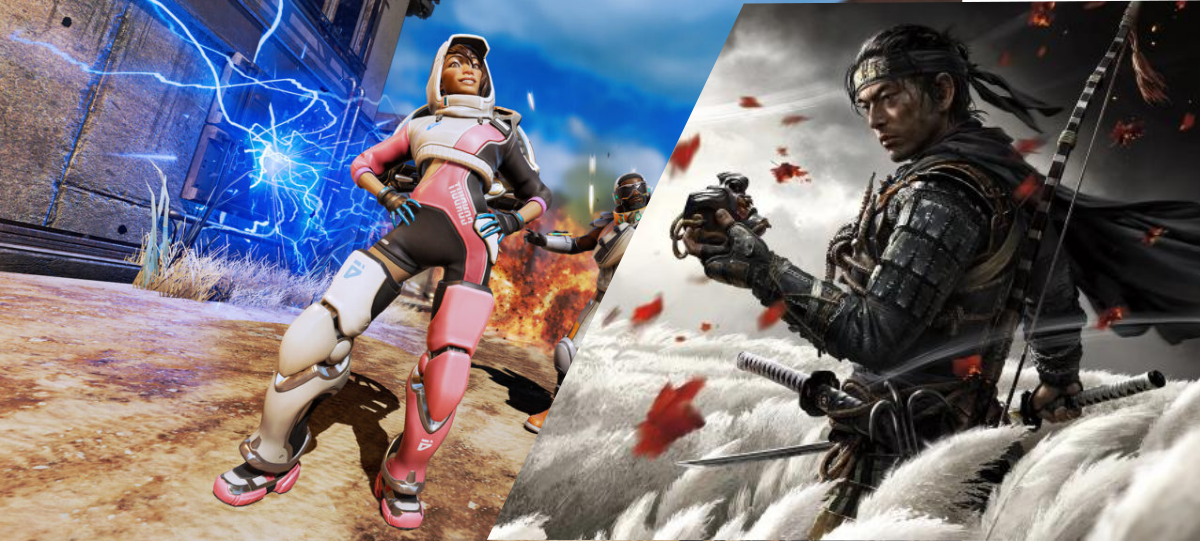
If you only play games like Counter-Strike 2, Valorant, League of Legends, Dota 2, Rocket League, or older multiplayer staples, 8GB VRAM is not your enemy. In that world, 8GB is still perfectly normal, and in many cases it is more than enough. These games are designed to scale well because they need huge player bases and broad hardware compatibility.
But the second you shift into modern AAA territory, the conversation changes. This is where 8GB stops feeling like a sensible middle ground and starts feeling like the minimum amount the game will tolerate before it begins quietly punishing you.
That is why the “8GB is enough” argument keeps surviving. It is not totally wrong. It is just usually built around the easiest use case. Once you include newer single-player games, bigger worlds, heavier texture packs, and any kind of visual ambition, 8GB starts looking less like a target and more like a warning label.
How This Actually Behaves on Real PCs
This is the performance-awareness part that matters more than another sterile benchmark chart. On real PCs, 8GB limits usually show up as a quality problem before they show up as a raw FPS disaster. That is why people get confused. The card still posts a playable average, but the actual experience feels worse than the number suggests.
In practical terms, here is how the pattern usually looks. At 1080p with medium or carefully tuned high settings, an 8GB GPU can still hold itself together in plenty of games. The trouble starts when you stack expensive texture presets, RT features, poor engine optimization, or heavier modern assets on top of each other.
Low VRAM pressure often appears as micro-stutter or uneven frametimes. If you want a deeper explanation of these patterns, see why games stutter on low-end PCs.
- CPU-bound esports titles: 8GB is usually not the limiting factor.
- AAA games at 1080p high: 8GB may still run them, but memory pressure can cause nasty frametime behavior.
- 1440p gaming: 8GB gets uncomfortable faster, especially with high textures.
- Ray tracing: this is where many 8GB cards stop feeling like a smart long-term buy.
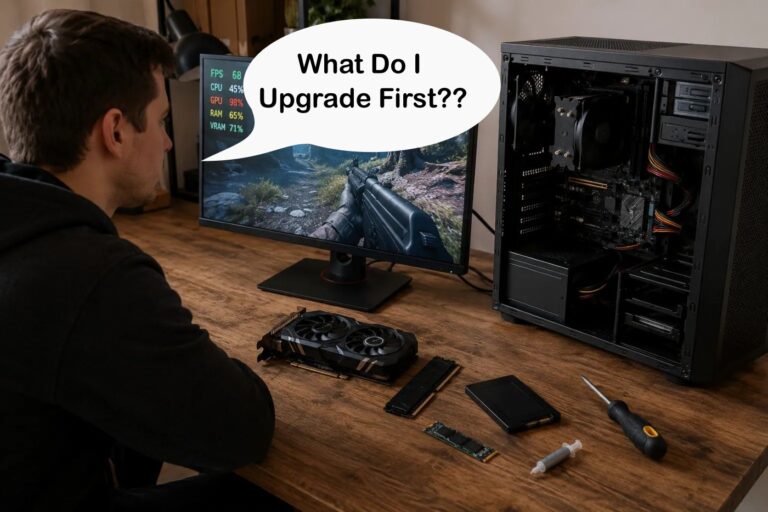
That is also why average FPS is not enough. You need to think about frame pacing, consistency, and how much tweaking is required before the game stops acting weird. If you are trying to work out whether your bottleneck is memory pressure or something else, our guide on how to tell if your CPU or GPU is the problem is the better next stop.
And if your game feels smoother after capping frame rate, that is not you imagining things. Read why capping your FPS can actually improve the experience if you want the clean explanation without the usual forum nonsense.
Why Average FPS Lies About VRAM Problems

One of the most annoying things about VRAM discussions is that people love to flatten them into a single metric. If Card A averages 72 FPS and Card B averages 68 FPS, people act like the debate is over. It is not.
VRAM issues often show up in the moments that averages hide. Quick traversal, area transitions, cutscene loads, asset-heavy fights, and camera swings can all reveal that the card is scraping by rather than cruising. A benchmark bar chart can make an 8GB GPU look fine right up until you actually sit down and play for thirty minutes.
That is why a lot of gamers end up feeling disappointed with a card that looked decent on review charts. The card was not necessarily weak. It just did not have enough breathing room for the games they actually wanted to play the way they wanted to play them.
If your FPS looks fine but the game still feels rough, you might be seeing frametime spikes rather than raw performance limits. Our guide on why your game is still stuttering walks through the most common causes.
Also VRAM is only one part of the equation. Before upgrading, check out our 8GB vs 12GB vs 16GB VRAM buying guide to see which memory size actually makes sense for your gaming setup.
When 8GB VRAM Is Still Perfectly Fine
To be fair, this is not an obituary for every 8GB GPU ever made. There are still plenty of people for whom 8GB is completely reasonable. Pretending otherwise would be dramatic nonsense, and there is already enough of that in PC hardware discourse.
If your gaming habits look like this, 8GB can still make sense:
- you mostly play esports titles
- you stick to 1080p
- you are happy to tune settings manually
- you do not care about ray tracing
- you are upgrading from something much older and just need a sensible budget jump
In that situation, an 8GB GPU is not automatically a mistake. It is just not something you should buy while pretending it has loads of room to spare. It is the kind of card that can still do a job, but only if the job description stays realistic.
Many buyers focus only on GPU model names and ignore VRAM limits entirely. Our breakdown of cheap gaming PC mistakes explains why that often backfires.
So Should You Still Buy an 8GB GPU in 2026?

This is the part that actually matters, because most people reading this are not conducting a philosophical VRAM debate for fun. They are trying to decide whether a GPU is worth their money. That changes the answer.
If you are buying used, grabbing a cheap stopgap, or building a budget esports machine, 8GB can still be defensible. If you are buying brand new and expecting your card to age gracefully through upcoming AAA releases, 8GB is a much harder sell.
That is the real shift. In 2026, 8GB is no longer the sweet spot. It is the compromise tier. You can live there, but you should at least admit that you are living there.
For readers trying to stretch a system without wasting money, our guide to cheap gaming upgrades that actually boost FPS is a smarter next click than blindly throwing cash at the newest GPU marketing cycle.
The Counter-Argument AMD and Budget Buyers Would Make
There is a fair defense of 8GB GPUs, and it is not stupid. A lot of gamers do still play at 1080p. A lot of the most-played games are lightweight. A lot of people care more about price than perfect future-proofing. That is real, and ignoring it would be lazy analysis.
Budget hardware exists for a reason. Not every card needs to be built for ultra presets, 1440p textures, and every shiny effect turned to maximum just so your screenshots can look smug. The problem is not that 8GB cards exist. The problem is when they are sold like they are still comfortably mid-range for modern AAA gaming. That part is getting harder to defend.
If you upgraded your GPU and the improvement feels smaller than expected, you may be running into a hidden bottleneck. Our guide on why your PC still feels slow after an upgrade explains why this happens more often than people think.
Final Verdict: 8GB Still Works, But It Is Already Struggling
So, is 8GB VRAM still enough for gaming in 2026? Yes, for some players. No, not comfortably for everyone. And absolutely not if you are trying to treat a new 8GB GPU like a safe long-term AAA purchase.
That is the honest version. 8GB is still alive, but it is no longer relaxed. It is no longer roomy. It is no longer the kind of spec you buy and forget about. In modern games, 8GB increasingly feels like the point where the compromises begin, not the point where confidence starts.
If your library is mostly esports and older games, you will probably be fine. If your goal is modern AAA gaming with fewer compromises and less fiddling, 8GB is already looking like yesterday’s idea of “enough.”
Sources: Steam Hardware & Software Survey, Bethesda PC Requirements for Indiana Jones and the Great Circle, Monster Hunter Wilds PC Requirements, Alan Wake 2 PC Requirements.