
Specs That Actually Matter
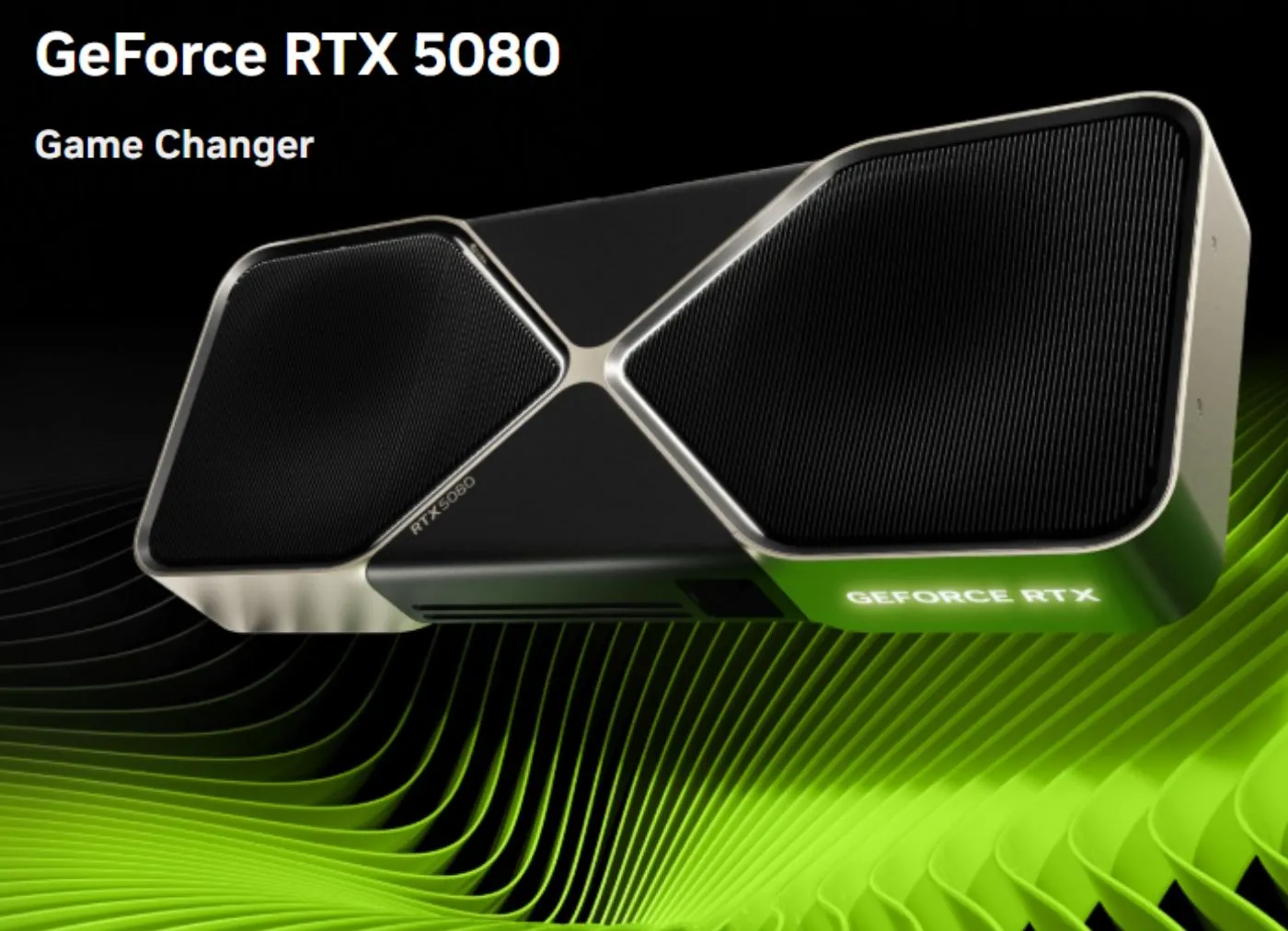
The RTX 5080 brings Blackwell architecture, DLSS 4, and GDDR7 memory to the table. On paper, it looks like a monster: 16–20 GB VRAM, boosted clock speeds, PCIe 5.0 support, and bandwidth improvements that make last-gen cards feel instantly dated. But let’s skip the spec sheet bragging rights here’s what matters:
- VRAM: 16 GB minimum means you’re safe in modern AAA titles without worrying about texture crashes.
- PCIe 5.0: Doesn’t mean much right now, but it’s your ticket to future-proofing.
- GDDR7: Faster load times, less stutter, and smoother asset streaming in open-world titles.
Gaming Performance, The Real Test

This is where the RTX 5080 earns its stripes. In 1440p, it laughs at everything. At 4K, it finally feels like we’ve hit the point where ray tracing doesn’t mean tanking your FPS into the 40s. Titles like Cyberpunk 2077 and Alan Wake II become legitimately playable at ultra settings with path tracing on, if you lean on DLSS 4.
And if you want to see how it stacks against demanding titles, for those thinking long-term, pairing a card like this with good system care (see our PC Maintenance and Optimization Guide) makes sure you squeeze every drop of performance out of it.
DLSS 4! The Magic Trick (Or Marketing?)

DLSS 4 is the real wild card. It’s not just upscaling anymore, it’s about frame generation and AI-driven latency reduction. Paired with NVIDIA Reflex, you can get buttery-smooth gameplay that feels close to native. But here’s the thing: it’s not perfect. Some artifacts still creep in, especially in fast-paced shooters, and purists will notice. Still, for most gamers, DLSS 4 is a lifesaver that lets the RTX 5080 flex beyond raw hardware limits.
RTX 5080 vs The Rest
RTX 5080 vs RTX 4080 Super
If you already own an RTX 4080 Super, the jump isn’t revolutionary. Expect around 25–30% better performance in real-world gaming. Worth it if you’re pushing 4K with ray tracing on, but for 1440p? Not so much.
RTX 5080 vs RTX 4070 Ti Super
This is the real buyer’s dilemma. The RTX 4070 Ti Super is still a fantastic card for 1440p and some 4K. The RTX 5080 absolutely wins in ray tracing and future-proofing, but you’ll pay a steep premium for it. If you’re budget-conscious, the 4070 Ti Super is the smarter buy.
RTX 5080 vs AMD RX 8900 XTX
AMD’s RX 8900 XTX has brute force, but DLSS 4 keeps NVIDIA in the lead where it matters: smooth, stutter-free gaming with ray tracing enabled. If you’re loyal to Team Red, the AMD card is cheaper. But if you want the cutting edge, the RTX 5080 still feels like the card designed for gamers first.
NVIDIA GeForce RTX 5080 Review: Power Needs, Cooling & Case Fit
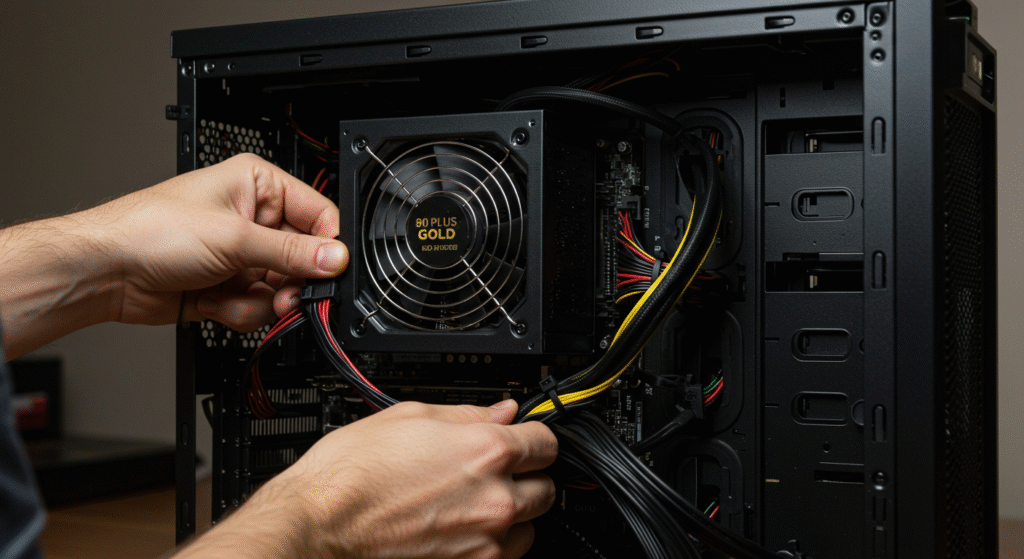
The RTX 5080 pulls around 320–350W under load, which isn’t outrageous but still requires a decent PSU (850W recommended). Cooling-wise, expect chunky triple-fan designs. If you’re on a mid-tower, measure carefully, this card isn’t small. Thermals are surprisingly good thanks to efficiency gains from Blackwell, but it still runs warm in long sessions. Noise levels are fine, you’ll hear your fans, but you won’t hate them.
Price, Availability & Future-Proofing
MSRP is high! no surprises there. Actual street prices will vary, and scalpers are likely circling already. The big question: is it worth it? If you’re aiming for a 4K path-traced future, this is the sweet spot. The RTX 5090 will exist, but it’s going to be overkill for most. The RTX 5080 hits that balance of “bleeding edge” and “not totally insane.” Expect it to stay relevant well into the next console cycle.
My Verdict as a Passionate Gamer

Here’s my honest take: I love this card. The NVIDIA GeForce RTX 5080 finally feels like the GPU that delivers on promises made years ago about ray tracing and 4K gaming. But love doesn’t always mean “buy now.”
- Buy it if: You want the absolute best 4K gaming experience today, you play with ray tracing, or you’re an early adopter who values future-proofing.
- Skip it if: You’re mainly gaming at 1440p, you already own a 4070 Ti Super or 4080 Super, or you don’t care about path tracing.
At the end of the day, this isn’t about NVIDIA’s marketing. It’s about your rig, your games, and the joy you get when a new card makes them shine brighter than ever. For me, that makes the RTX 5080 worth celebrating — even if it isn’t perfect.
FAQs
Is the RTX 5080 worth it for 1440p gaming?
Not really, it’s overkill. A 4070 Ti Super is a better fit for 1440p.
Can the RTX 5080 run Cyberpunk 2077 with path tracing at 60 FPS?
Yes, with DLSS 4 enabled. Native frames will dip, but DLSS 4 makes it smooth.
How much power supply do I need for RTX 5080?
At least 850W is recommended for stability, especially with a high-end CPU.
Related Reads You’ll Actually Use!
If you’re still weighing your GPU options, you might want to read our RX 9060 XT 16GB Review for a look at AMD’s midrange contender. Curious about what’s coming down the pipeline? Our coverage of the RTX 5070 Ti Super Leak breaks down the rumored specs. And if you’re aiming to tame temps no matter what GPU you run, don’t miss our guide on how to undervolt your GPU for cooler, quieter gaming.
Where the Numbers Come From?
We didn’t just thumb-suck these numbers. The benchmarks, comparisons, and details in this review are backed by trusted sources, from NVIDIA’s own announcements to independent testing by respected outlets. We also dug through the rants and raves of real gamers on Quora and Reddit to get a feel for how the RTX 5080 performs outside of lab conditions. Here are the key references we leaned on: