










Updated December 8 2025 — revised specs + performance outlook.
The next generation Xbox is officially an AMD-powered machine again, and while that sounds familiar, the future could look very different from what we’ve seen before. Next-Gen Xbox AMD Specs Zen5 RDNA4 Expectations and Microsoft isn’t talking teraflops or big performance claims yet, but the silicon decisions happening right now will shape how your games look, load, run, and scale for the next decade.
If you want real expectations instead of marketing fog, let’s break down what’s actually likely based on AMD’s recent hardware trajectory, Xbox development priorities, and where console design is trending in 2026 and beyond.
What the AMD, Xbox Partnership Actually Means
AMD will continue building the CPU + GPU silicon for upcoming Xbox hardware, not just the next console, but potentially several future iterations. According to Xbox Wire, the deal focuses on shared architecture and long-term roadmap alignment, not one-off chip delivery.
Translation? Expect consistency across Xbox, Windows, and Game Pass hardware for years, with Zen 5 or Zen 6 CPU architecture paired with an RDNA 4 or newer GPU design. AI acceleration could also be integrated directly into the APU, aligning with Microsoft’s push for cloud-enhanced rendering, upscaling, and background compute.
What it is not, a guaranteed generational leap. Partnerships like these exist to streamline cost, development, and long-term compatibility, not break physics overnight.
AMD’s Console History: Strong, But Not Always Bold

AMD has powered Xbox One, Xbox Series X|S, and Sony’s last two PlayStations, so yes, they know the playbook. Their designs are efficient, developer-friendly, and affordable.
But the trade-offs are real:
- Thermal limitations under sustained load
- GPU bottlenecks in RT-heavy titles
- Series S performance restraints for developers
- Cost-first silicon instead of bleeding-edge power
AMD is reliable, not always revolutionary.
What Gamers Should Expect From the Next Xbox

Based on current architecture direction, here’s where next-gen Xbox hardware is realistically headed:
- Zen 5/6 CPU: Higher IPC + better background task handling
- Faster SSD + I/O pipeline: Load times drop even further
- RDNA 4+ GPU: Better efficiency, wider compute, not a 2× jump
- True 4K 120Hz: Possible, but likely using upscaling & frame-gen
- AI Compute Blocks: Rendering assist, audio, NPC behavior, FSR tech
Expect improvement, but more evolution than shock-and-awe revolution.
The Real Bottleneck: Heat, Noise, and Efficiency
More cores and faster clocks sound great, until you try cooling them in a console chassis. The Series X already hits thermal ceilings, and smaller nodes don’t eliminate heat, they just shift where it builds.
Unless Microsoft redesigns airflow or uses exotic vapor chamber scaling, the next Xbox may push cooling harder than any console before it. Quiet performance won’t come free.
How AMD Silicon Shapes Future Games
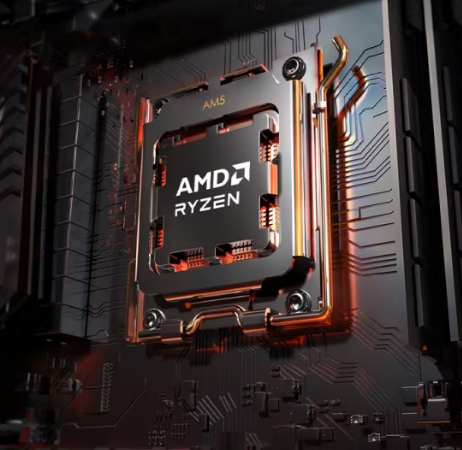
The CPU + GPU inside a console doesn’t just run games, it dictates how games get built.
If AMD continues focusing on wider compute cores instead of brute-force RT, expect:
- More upscaling via FSR 3 instead of raw 4K rendering
- Higher frame-rates prioritized over perfect pixels
- Better parity between PC + Xbox builds
Especially for mid-range AMD GPUs, console and PC optimizations may align more cleanly than ever.
Where AMD Still Shines

While Nvidia dominates raw ray tracing and AI upscalers today, AMD brings several practical wins:
- Smart Access Memory: Small boost, consistent uplift
- FSR 3 + Frame Generation: Maturing fast, multiplatform friendly
- Shared PC/Console pipelines: Dev time drops, patches improve
AMD isn’t stagnant, their roadmap is loaded with efficiency-first upgrades. If you want to dig further, the Xbox Newsroom has ongoing hardware notes.
Want the PC side of this story instead? See our breakdown here: Why PC Gamers Are Ditching AMD in 2025
Should Gamers Care Yet?
The announcement matters, but it’s not time to build hype charts or start console wars.
Until dev kits leak or Microsoft shows silicon performance on stage, all we have is architecture direction and roadmap clues. It could be a leap. It could be a refinement. It could be a safer mid-gen stretch that lasts a decade.
AMD is steering again. Where they take Xbox depends on efficiency breakthroughs, thermal design, and whether RDNA 4 finally changes the silicon ceiling.
Thoughts? Debates? Rage? Comments are open, or contact us if you want a private argument.
Next-Gen Xbox & AMD FAQ
Will the next Xbox definitely use AMD hardware?
Yes. Microsoft and AMD have confirmed an ongoing partnership for future Xbox consoles, meaning AMD will continue to supply CPU and GPU silicon for the next generation.
What CPU will the next-gen Xbox likely use?
Most expectations point to Zen 5 or Zen 6 architecture, offering higher IPC, better multitasking, and lower latency for game engines.
What GPU will power the next Xbox?
RDNA 4 or a close variant is the strongest likelihood. It will prioritize efficiency and compute scaling, but probably won’t double performance over the Series X.
Will the next Xbox hit 4K 120Hz?
It’s technically possible, but sustained 4K 120 will likely rely on upscaling methods like FSR 3 and frame generation instead of raw rendering power.
Does this mean Xbox will support AI acceleration?
Very likely. AMD’s new silicon roadmap includes AI compute blocks, and Microsoft is pushing AI heavily across Windows and Game Pass infrastructure.
Will thermals be a problem in the next generation?
Potentially. Higher clock speeds mean more heat. Microsoft may need a redesigned cooling system or smaller node to prevent fan noise and thermal throttling.
Should PC gamers expect performance parity?
More than ever. If AMD keeps alignment between RDNA, FSR, and console architecture, we could see closer performance between mid-range PCs and Xbox builds.
When will we see real benchmarks?
Benchmarks only arrive once dev kits leak or Microsoft unveils gameplay. Until then, everything is based on architecture direction, not final silicon numbers.