
If you keep losing in EA FC and you cannot even explain why, you are not alone. You can have more possession, more shots, and still walk away feeling like the game is bullying you for fun. It is not always “scripting.” Most of the time it is a handful of beginner habits that feel correct, but quietly sabotage every phase of play. So lets explain Why You Keep Losing in EA FC!
I should be clear about something before we go further. I’m not a high-division EA FC player. I lose matches, I make dumb mistakes, and I’ve had more than a few sessions where I closed the game convinced it was rigged.
That’s why I started asking questions instead of guessing. I sat down with a cousin of mine who plays EA Sports FC at a genuinely high level, the kind of player who understands why things work, not just what works. On top of that, I went digging through Reddit threads, community discussions, and gameplay breakdowns to see which frustrations kept coming up again and again.
What you’re about to read isn’t theory. It’s the patterns that kept showing up when better players explained why beginners keep losing, even when they feel like they’re doing everything right.
Quick Diagnosis: What’s Probably Costing You Matches?
| If this keeps happening… | You’re probably doing… | Jump to |
|---|---|---|
| Losing possession constantly | Sprinting too much | Mistake 1 |
| Conceding easy goals | Dragging defenders out of position | Mistake 2 |
| Lots of shots but few goals | Forcing every attack | Mistake 3 |
| Your players never seem where you need them | Ignoring roles and instructions | Mistake 4 |
| Nothing seems to improve | Changing too many things at once | Mistake 5 |
The biggest lie beginners believe
“If I play faster, I’ll be harder to defend.” This is the trap. Speed feels like pressure. Speed feels like confidence. Speed also makes your touches heavier, your turns wider, your passes sloppier, and your decisions later. In other words, it feels aggressive, and it gets you scored on.
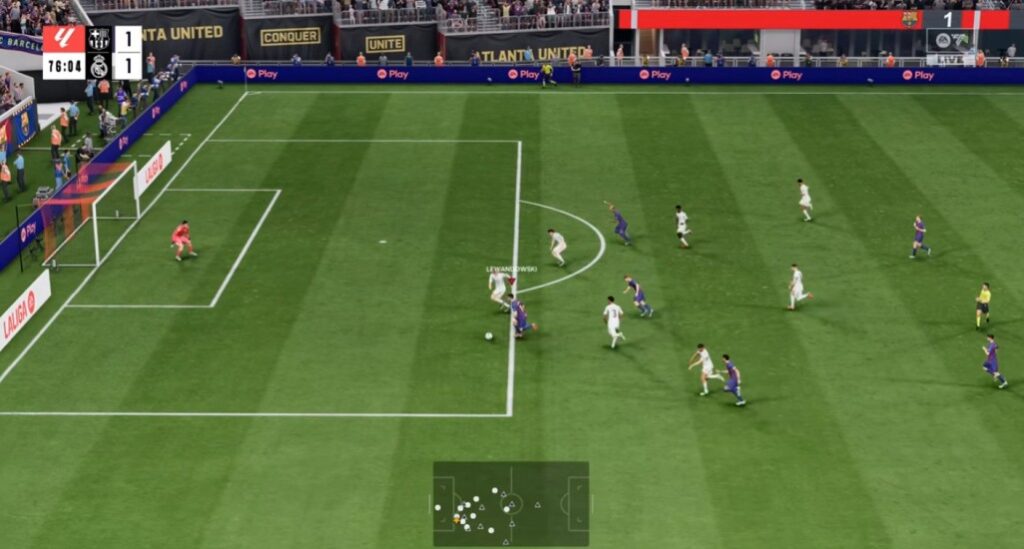
EA FC rewards controlled movement and quick decisions, not constant sprinting and panic passing. When you are always moving at maximum speed, you reduce your options. You also make it easier for a decent defender to read you, because you are basically announcing your plan with your first touch.
Mistake 1: Treating Sprint Like a Default Button
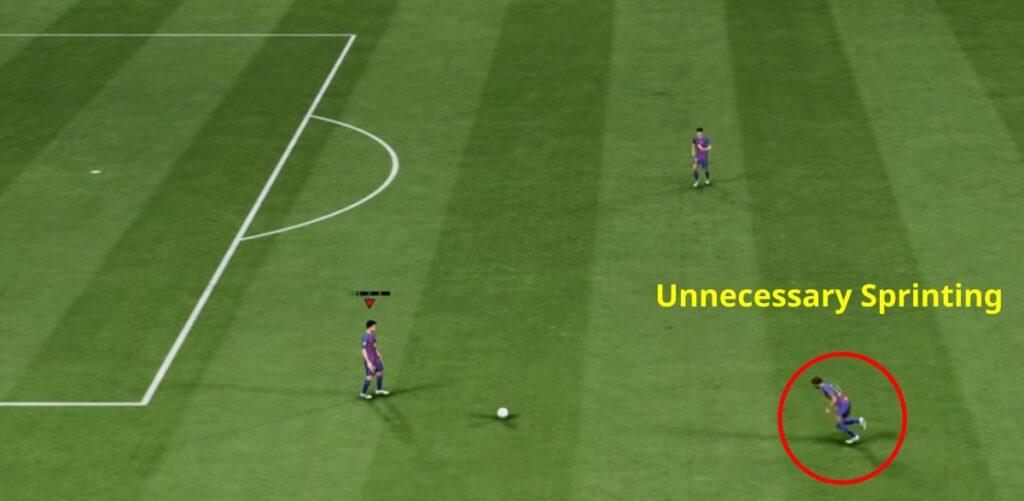
This is the most common beginner mistake, and it shows up everywhere. Attacking, defending, recovery runs, build-up play, even your first touch. Beginners sprint because they are trying to keep up with the game’s pace. The problem is, sprinting changes how your player behaves, and the game is not subtle about the punishment.
Why it feels right
- You want to outrun defenders.
- You feel late to every ball, so you mash sprint to “fix it.”
- Older FIFA instincts taught you that sprint is how you create danger.
Why EA FC punishes it
- Heavier touches: you lose close control and invite tackles.
- Animation commitment: sudden turns and stops get slower, so you feel “stuck.”
- Predictable lanes: sprinting makes you run in straight lines more often, which is easy to contain.
Fix for your next match: Use sprint as a tool, not a lifestyle. Sprint in two moments only, when you have clear space in behind, or when you are chasing a loose ball. In tight areas, stop sprinting and focus on calm touches and fast decisions.
Mistake 2, defending with the wrong player
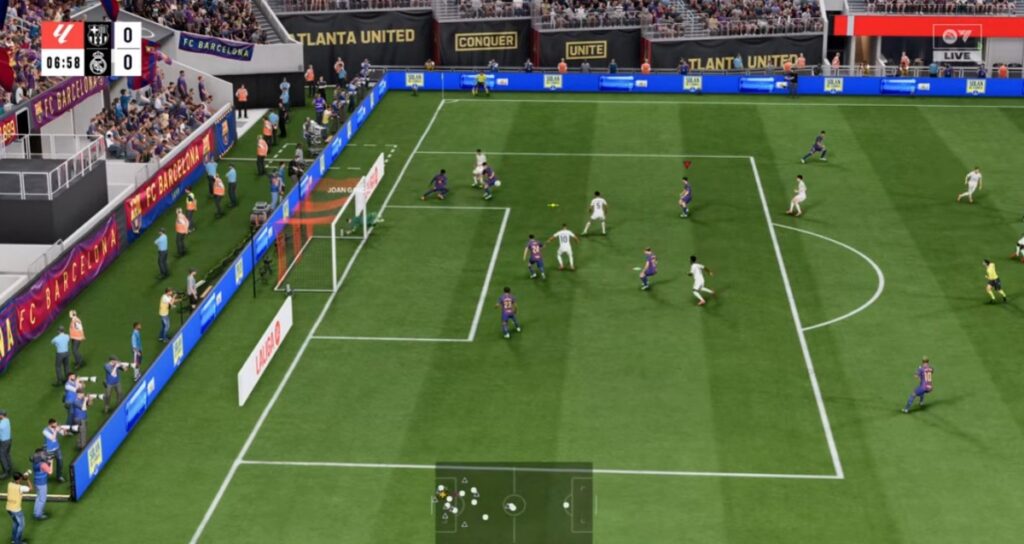
If you have ever said, “My defense just opens up,” this is usually why. Beginners defend like it is a street fight, they chase the ball with whoever is closest. The game is happy to let you do that, and then it punishes you for leaving holes behind.
What beginners do
- Drag a center-back out of the line to chase a dribbler.
- Overcommit to a tackle, miss, and concede a free lane.
- Switch players too late, then sprint at the ball like a heat-seeking missile.
What better players do instead
- Protect the middle first: force play wide, block the obvious pass or cutback.
- Defend space, not the ball: make the attacker run into bad angles.
- Keep your center-backs home: let your midfielders apply pressure when possible.
A simple mental cue that helped me a lot is this: your goal is not to win the ball instantly, your goal is to stop the easy goal. When you defend like that, you concede fewer ridiculous tap-ins, and you stop feeling like your backline has a mind of its own.
If you want a broader “where do I even start as a new player” map, your main hub for beginner-friendly genres is here: PC gaming genres for beginners.
Mistake 3, playing every attack like it must end in a shot
This one hurts because it looks like you are “doing a lot.” You build up, you force the ball into the box, you shoot through traffic, and it gets blocked. Then you get countered, concede, and wonder how the other guy scored from two passes.
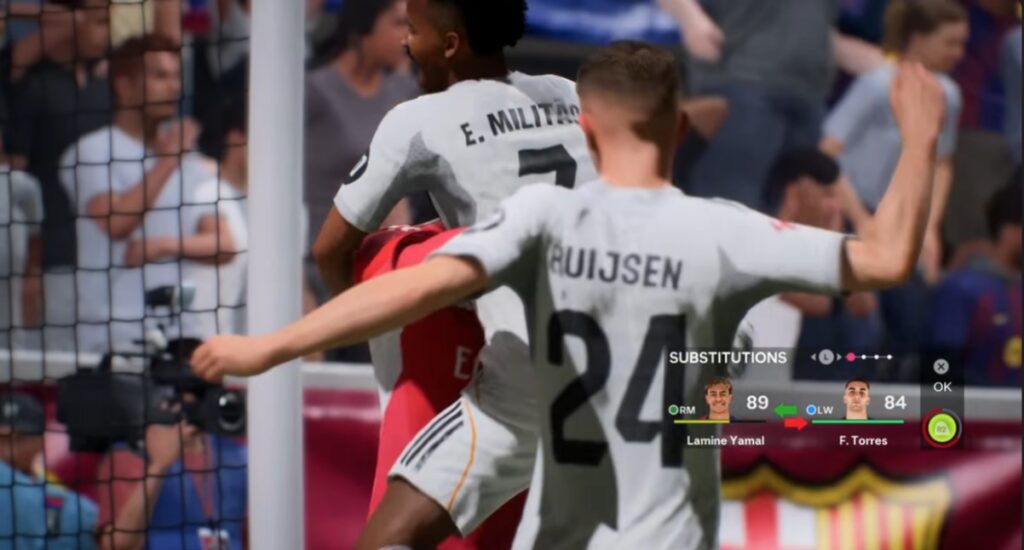
Beginners lose because they treat possession like a countdown timer. If the attack does not end immediately, they force it. The game loves forced attacks because forced attacks are predictable.
Common symptoms
- You take shots that are “technically a shot,” but never a good chance.
- You always shoot the moment you see the goal, even if three defenders are stacked in front.
- You lose the ball in the final third and concede on the break.
What changes everything
Give yourself permission to reset. If the lane is not there, pass back, switch play, and rebuild. You do not lose points for being patient. You lose matches for gifting free counters.
Yes, it feels boring at first. Then it starts winning you games, and suddenly patience becomes your favourite “skill move.”
Mistake 4, ignoring roles and instructions, then blaming “bad gameplay”
This is a sneaky one because it does not feel like a beginner mistake. You assume your players will behave how you imagine they should behave. Then you watch your winger stand still, your striker drift away from the box, or your midfield disappear when you lose possession.
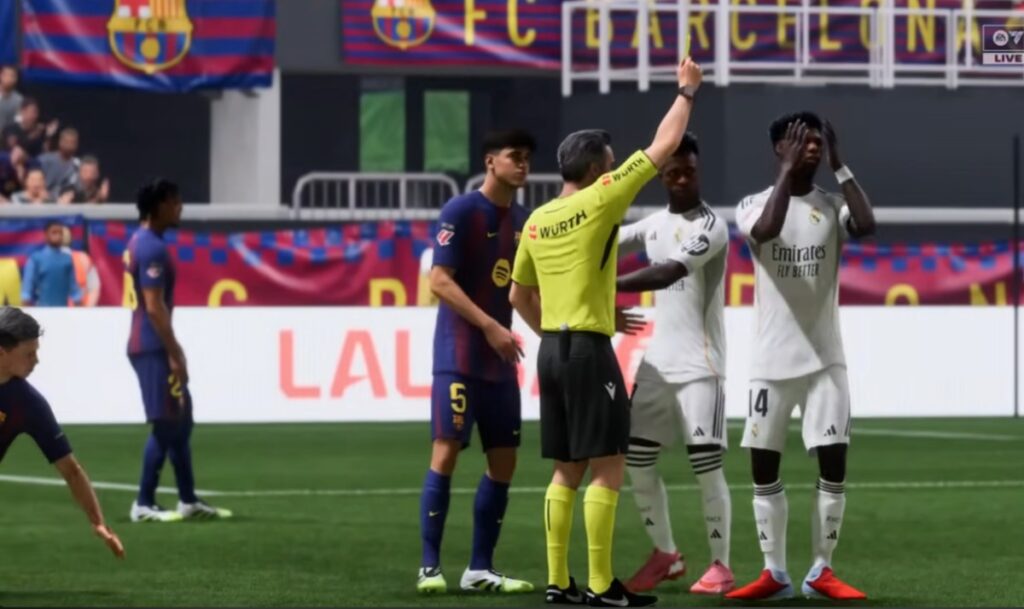
At a high level, a lot of EA FC is about where your team stands before the ball arrives. If your setup does not match your intentions, you will always feel late and under pressure.
What beginners assume
- Stats override everything.
- A “fast” player will always feel fast.
- Everyone will naturally make smart runs.
What actually happens
- Roles and instructions shape positioning, support angles, and defensive recovery.
- If your team shape is wrong, you force passes that were never on.
- You sprint more to compensate, and you know how that ends.
You do not need to become a tactics nerd to fix this. You just need to notice when your team is not giving you options, then make small adjustments. One change at a time, not a full tactical meltdown at halftime.
Mistake 5, changing everything at once, then learning nothing
This is the part nobody wants to hear, because it is not a settings fix. Beginners often try to improve by changing ten things at once. New formation, new camera, new controls, new style, new players, and by match three they are more confused than when they started.
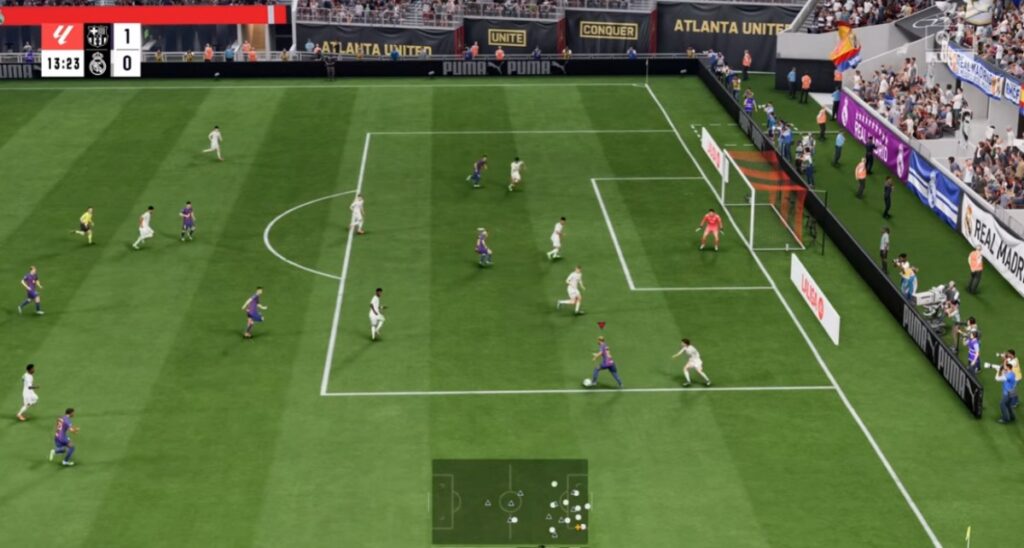
If you want to improve quickly, change one habit per session. That is it. Pick one mistake from this article, focus on it for five matches, and let your brain adapt. Then move on.
- Session 1: stop sprinting in tight spaces.
- Session 2: stop dragging center-backs out of line.
- Session 3: reset attacks instead of forcing shots.
This is how good players actually get good. Not by discovering a secret button combo, but by removing the habits that leak goals.
Beginner vs Better Player Habits
| Beginners Usually… | Better Players Usually… |
|---|---|
| Hold Sprint almost constantly | Sprint only into open space |
| Chase the ball | Protect passing lanes |
| Shoot whenever possible | Wait for higher-quality chances |
| Change tactics every few matches | Master one system before changing |
| React to the current play | Anticipate the next pass |
A Simple 20-Minute Practice Routine
You don’t need to overhaul your entire game overnight. Instead, focus on one habit at a time with this simple practice routine.
- 5 minutes: Stop sprinting whenever you’re in tight spaces.
- 5 minutes: Defend with your midfielders before switching to your centre-backs.
- 5 minutes: Reset attacks instead of forcing risky passes or shots.
- 5 minutes: After every goal you concede, identify the mistake before kicking off again.
Why this feels worse in EA FC 26 (and newer versions)
Even though this article is evergreen, it is worth calling out why EA FC 26 specifically can feel harsher to new players. The general pattern, based on what higher-level players and community breakdowns keep repeating, is that newer versions are less forgiving when you overcommit or play at full speed without control.

- Defensive shape punishes mistakes faster: one dragged defender can create a clear lane instantly.
- Bad touches get punished: heavy control invites tackles and counters.
- Patience matters more: forcing play into traffic is a reliable way to donate possession.
If EA FC 26 feels “unfair,” it may just be that the game is better at exposing sloppy habits. Which is annoying, but also useful, because it tells you what to fix.
The one change that wins more games than any tip
Stop reacting, start anticipating. Beginners react to the ball. Better players react to the next pass. They are already blocking lanes, already protecting the middle, already thinking about the counter before the shot even happens.

A simple way to train this is to ask one question every time you lose the ball:
- “Where is the danger pass?”
Not “where is the ball,” because you already know where the ball is. You can see it. The danger is the pass that breaks your shape. Cut that off, and half the panic disappears.
Signs You’re Actually Improving
Don’t measure your progress by wins alone. As these habits improve, you’ll usually notice the game becoming easier to read before your results dramatically change.
- You’re keeping possession for longer.
- You concede fewer simple counter-attacks.
- Your attacks feel calmer instead of rushed.
- You’re creating better chances rather than simply taking more shots.
- Matches feel slower because you’re anticipating play instead of reacting to it.
Quick takeaways (save this for your next match)
- Sprint less: it kills control, not just stamina.
- Defend space: stop dragging center-backs out to chase.
- Reset attacks: forcing shots feeds counters.
- Fix one habit per session: changing everything teaches you nothing.
- Anticipate the danger pass: you will concede fewer cheap goals.
Frequently Asked Questions
Why do I keep losing even when my team is better?
Player ratings help, but they don’t compensate for poor positioning, constant sprinting or forcing attacks. Better players usually win because they make fewer mistakes, not because they have better squads.
Is EA FC scripted?
While unlucky moments happen, most consistent losses come from repeatable habits like dragging defenders out of position, rushing attacks and giving away possession too easily.
Should beginners use Sprint less?
Yes. Sprinting is most effective when you’re attacking open space or chasing a loose ball. Using it constantly reduces close control and makes your attacks much easier to defend.
What’s the fastest way to improve at EA FC?
Focus on fixing one habit at a time over several matches. Most players improve much faster by mastering one weakness than by trying to change everything at once.
Where to go next
If this article felt uncomfortably accurate, good. That means you found the leaks. The next step is learning what to do instead of those habits, with a simple playstyle you can actually repeat under pressure.
Start here: EA FC 26 tips for beginners. It is the practical follow-up to this, and it turns the “stop doing this” into “do this instead.”
If you want an example of how different genres teach you differently, and why some games feel easier to “get” fast, this list is a great contrast read: 10 free FPS games for low-end PCs.
And if you want a reminder that brutal learning curves are basically a genre of their own, here’s one that hits hard for a lot of players: the Dota 2 learning curve.
Also: Many of these mistakes are not guesses or personal theories. They line up closely with how EA Sports explains movement, positioning, and defensive discipline in its official guidance, and they show up repeatedly in Reddit community discussions where players compare why the same habits keep costing them matches. Different players, same patterns, same outcomes.
Fix the habits first. Then the game starts making sense. Then you start winning matches that used to feel impossible.